
Last updated September 10, 2026
Full 25-point door and opener safety check with every visit - springs, cables, rollers, tracks, and your LiftMaster or Chamberlain opener included
You get a price before we start. It does not change when the truck arrives.
 Before
 After
After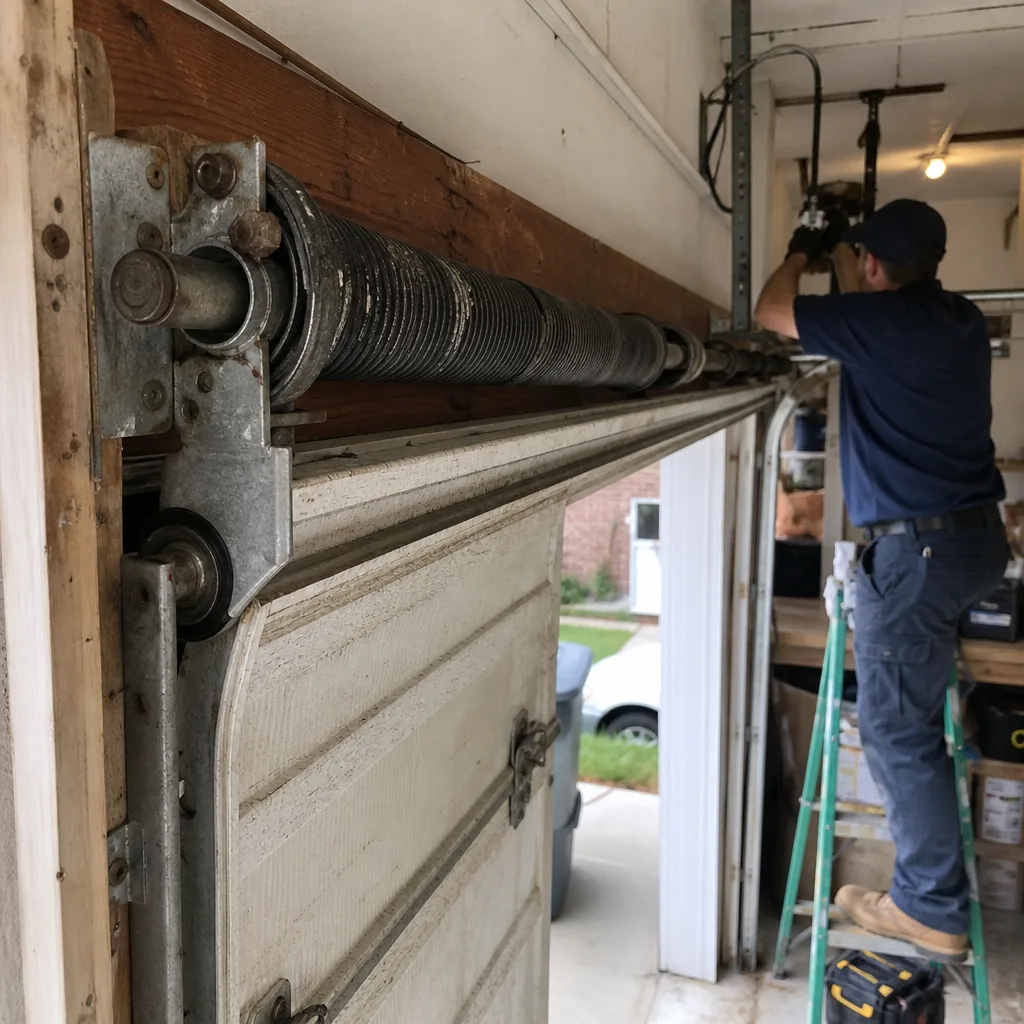 Before
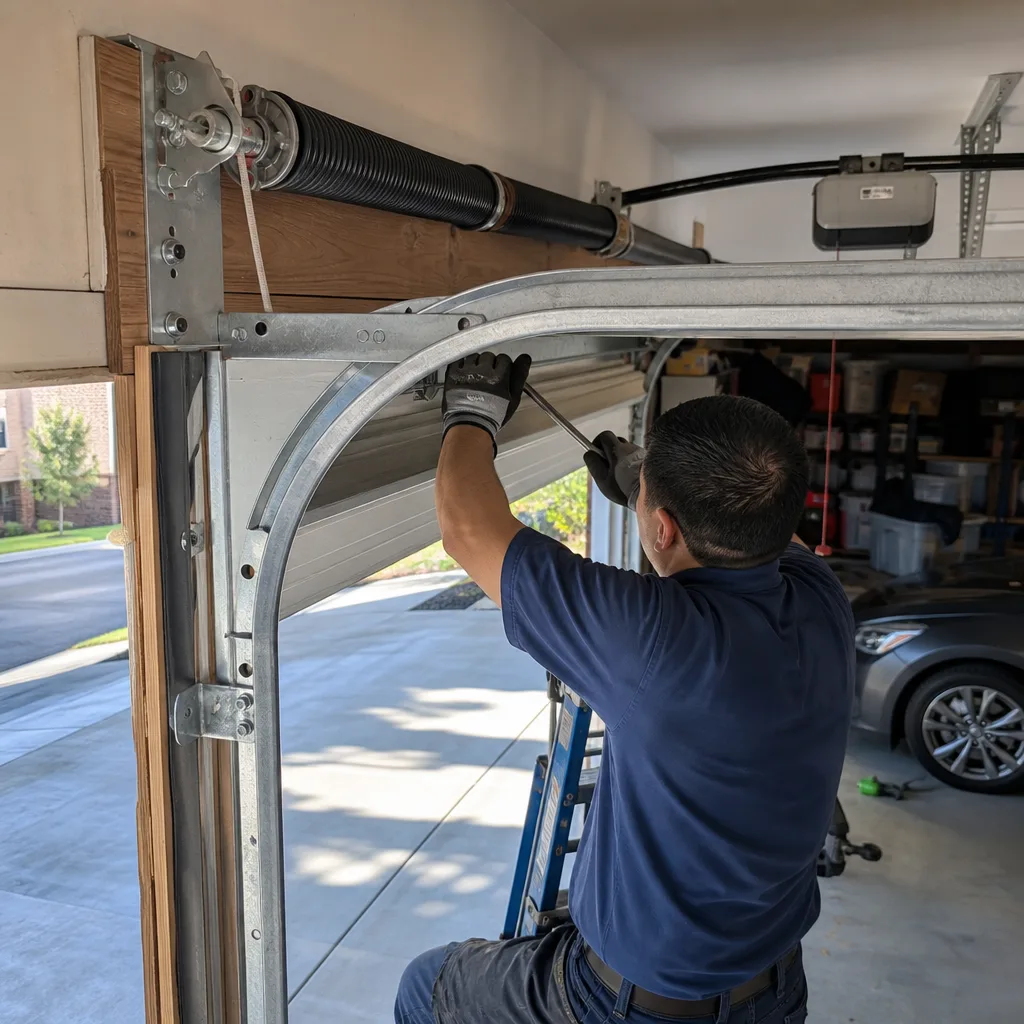 After
After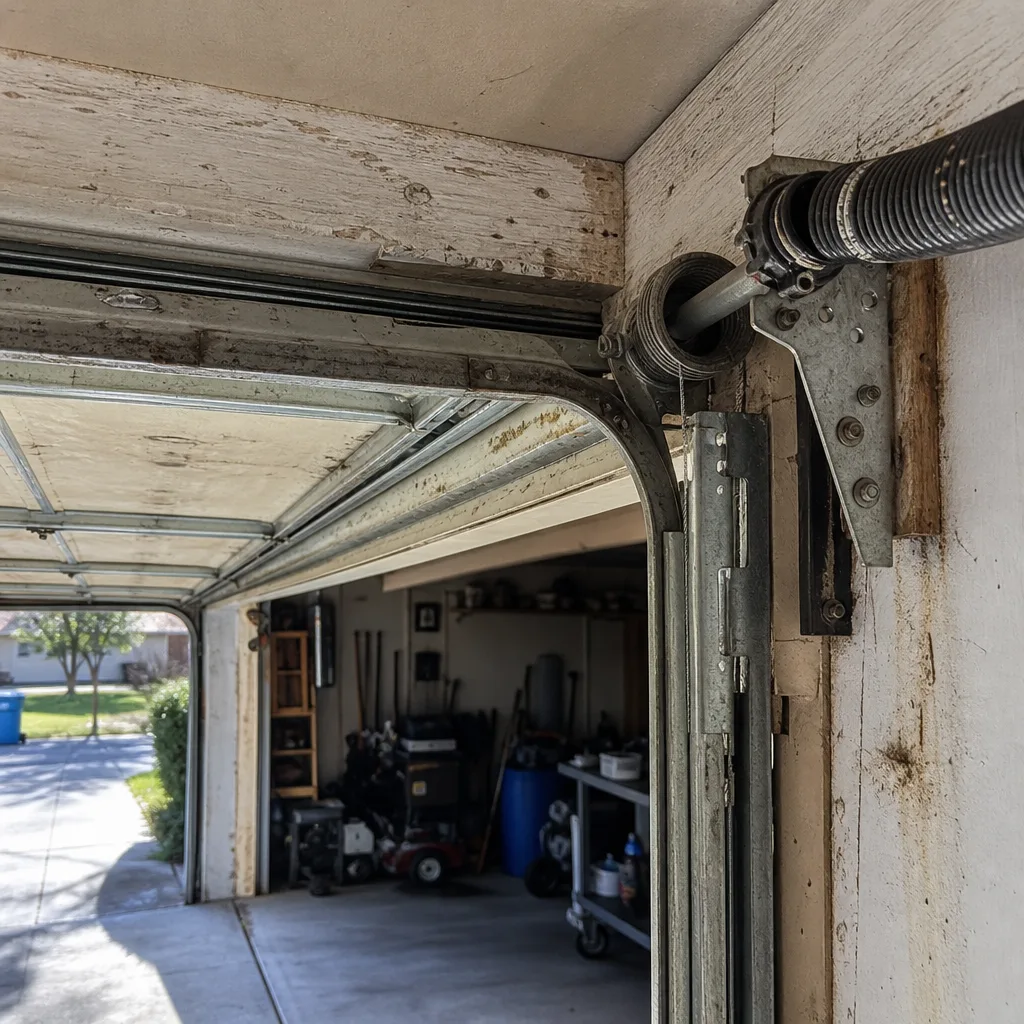 Before
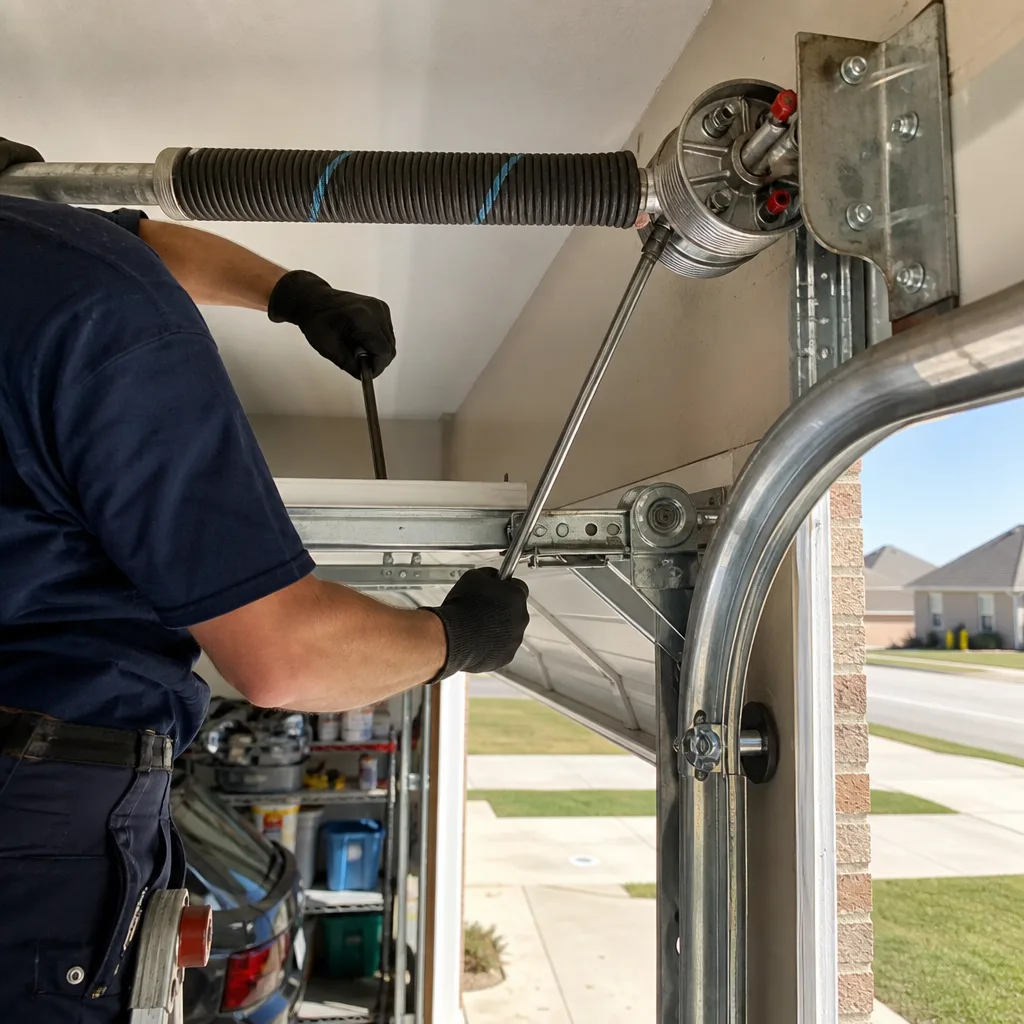 After
AfterSeasonal Garage Door Care for Celina: Year-Round Homeowner’s Guide
The spring tension set for a 105°F August in Celina is measurably wrong for a 22°F January morning. Most doors run both extremes on the same adjustment, and that mismatch is why so many springs break in winter. In this guide, we’ll walk through what Celina’s actual weather calendar does to your garage door, when to check what, and how to avoid the repairs that always seem to cluster in the weeks after the first hard freeze. For a deeper dive, see The Complete Guide to Garage Door in Celina.
Quick Answer
Garage door care in Celina means preparing for two brutal seasons and two short transitions. Homeowners should check track alignment and roller clearance before June heat causes thermal expansion, replace weatherstripping every 2-3 years due to UV damage, run a pre-freeze lubrication and cable inspection by late November, and clear photo-eye sensors monthly during pollen season. An annual professional tune-up in October catches what DIY maintenance misses.
Table of Contents
- Summer Heat: What 105°F Does to Steel Tracks and Rollers
- Fall Transition: The Pre-Freeze Checklist Before Celina’s First Hard Freeze
- Winter Cold: Why Springs Break in January and How to Prevent It
- Spring Pollen: The Hidden Cause of Opener Sensor Failures
- Storm Prep: Hail, Wind, and Panel Damage in North Texas
- Weatherstripping Reality: Why Celina Doors Fail Faster Than Rated
- What Homeowners Can Handle and What Belongs to a Pro
- A Practical Annual Calendar for Celina Homeowners
Summer Heat: What 105°F Does to Steel Tracks and Rollers
Steel expands. Every Celina homeowner knows this in August when the patio door sticks, but fewer think about what it means for the 2-inch steel track running up both sides of their garage door. A standard 7-foot vertical track can lengthen by 1/16 to 1/8 inch between a mild May morning and a 105°F July afternoon. That doesn’t sound like much until you realize the roller wheels are engineered to a tolerance of about 3/32 inch.
Here’s what we see in Celina every summer: rollers climb the track, the stem binds in the bracket, and the door starts to shudder or pop at the same point in its travel. Left alone, this wears flat spots into the rollers and eventually dimples the track itself. The repair is track realignment and roller replacement. The prevention is a 10-minute clearance check in late May.
What to check before June:
- Close the door and inspect the gap between each roller and the track edge. You want roughly 1/8 inch of play on both sides. If the roller is riding hard against one side, the track has shifted or the mounting bracket has loosened.
- Look for rust streaks below the roller brackets. In Celina’s humidity, a loose bracket traps condensation and the bolt heads rust first. That’s an early warning.
- Run the door manually (disengage the opener first). It should move with steady pressure, no catching or grinding. If it hangs up at the same height every time, something has moved.
- Tighten the track mounting bolts with a socket wrench, but do not over-torque. The track needs to float slightly; crushing it against the jamb makes the problem worse.
The neighborhoods west of Preston Road, where the clay soil shifts more aggressively, see this issue earlier and more often. We’ve realigned tracks in Light Farms and Mustang Lakes in July that were fine in April. The ground moves, the frame settles, and the summer heat finishes the job.
If your door is running rough by mid-summer, don’t wait for fall. A track adjustment is a quick visit. A track replacement, after the roller has wallowed out the steel, is not. Garage Door Repair in Celina is something we handle year-round, but catching it early saves both time and money.
Fall Transition: The Pre-Freeze Checklist Before Celina’s First Hard Freeze
Celina’s first hard freeze typically arrives in late November, though we’ve seen it in mid-October and as late as mid-December. The problem isn’t the freeze itself. It’s that your garage door spent six months in summer adjustment, and now the metal contracts, the grease thickens, and the nylon rollers that ran fine at 90°F become brittle at 30°F.
We schedule our heaviest tune-up volume in October for this reason. A door that is borderline in fall will fail in winter. The pre-freeze checklist covers four systems: lubrication, cable tension, bottom seal integrity, and spring balance.
Lubrication: White lithium grease on the torsion spring, the bearing plates, and the roller stems. Not WD-40, which is a solvent, not a lubricant. Not motor oil, which attracts dust and turns to grinding paste. The grease should be thin enough to penetrate, thick enough to stay through January. In Celina’s dry winters, we see doors that were lubed in November running dry by February. A second light application in January is not excessive.
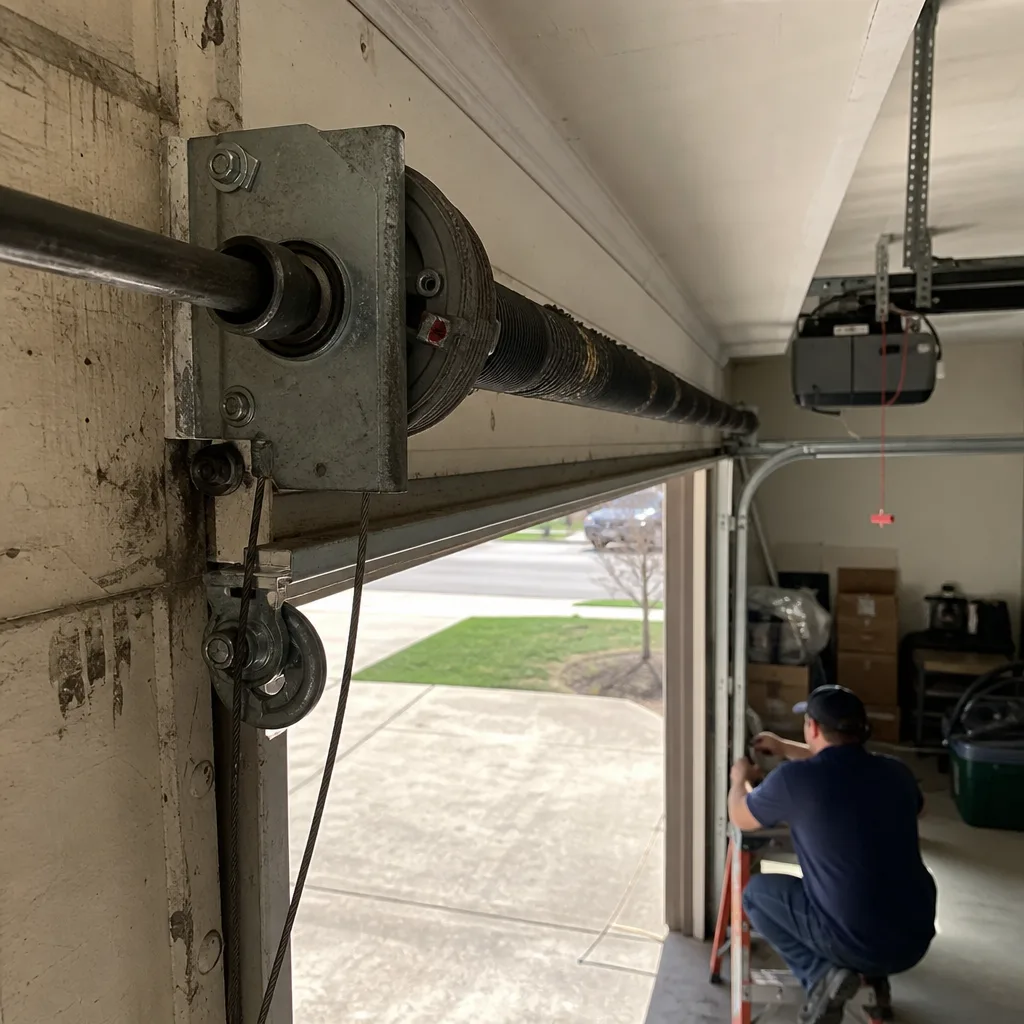
Cable tension: The lift cables should be taut but not piano-wire tight. Check where they wrap around the bottom fixture; if you see fraying or rust blooming under the zinc coating, the cable is weakening. A cable failure with the door open drops the full weight on one spring, and that spring usually breaks. We replace cables in pairs, because if one is fatigued, the other is not far behind.
Bottom seal: The rubber or vinyl strip across the door bottom hardens in cold and loses its flex. A seal that still looks whole can develop gaps at the corners where it meets the track. Slide a piece of paper under the closed door at each corner; if it pulls through easily, air and water are getting in. For Celina homes with conditioned garages or workshop spaces, this is also an energy issue.
Spring balance: Disengage the opener and lift the door manually to waist height. It should stay there, neither rising nor falling. If it drifts, the spring tension is off. In summer, a slightly weak spring might still lift the door. In winter, the thickened grease and contracted metal add enough resistance that the opener strains, overheats, or strips its gear.
Our Mainspring Garage Door Co. home page lists our current offers, including the $89 Seasonal Tune-Up that covers this entire checklist. We do it in one visit, with the parts on the truck.
Winter Cold: Why Springs Break in January and How to Prevent It
Torsion springs are rated in cycles: 10,000, 15,000, or 20,000 open-close cycles at a standard temperature, usually 70°F. Every 10 degrees below that reduces the spring’s life by some percentage. More importantly, the spring was tensioned at installation to balance a door of a specific weight. In Celina’s summer, the door is effectively lighter because the lubricant is thin and the metal parts move freely. In January, the same door is effectively heavier. The spring works harder on every cycle, and the fatigue accumulates.
The spring that was set for August performance is the wrong spring for January reality. This is not a design flaw; it’s physics. But it explains why our emergency call volume in Celina always spikes the week after the first sustained freeze. The spring doesn’t break on the coldest day. It breaks on the tenth cold morning, after nine days of running at the wrong tension.
Signs a spring is failing before it breaks:
- The door opens unevenly, with one side rising faster than the other.
- The opener labors, or the light on the motor housing flickers during operation.
- A visible gap appears in the coils of the torsion spring, usually two or three coils wide.
- The door feels heavier when lifted manually, or it won’t stay open at waist height.
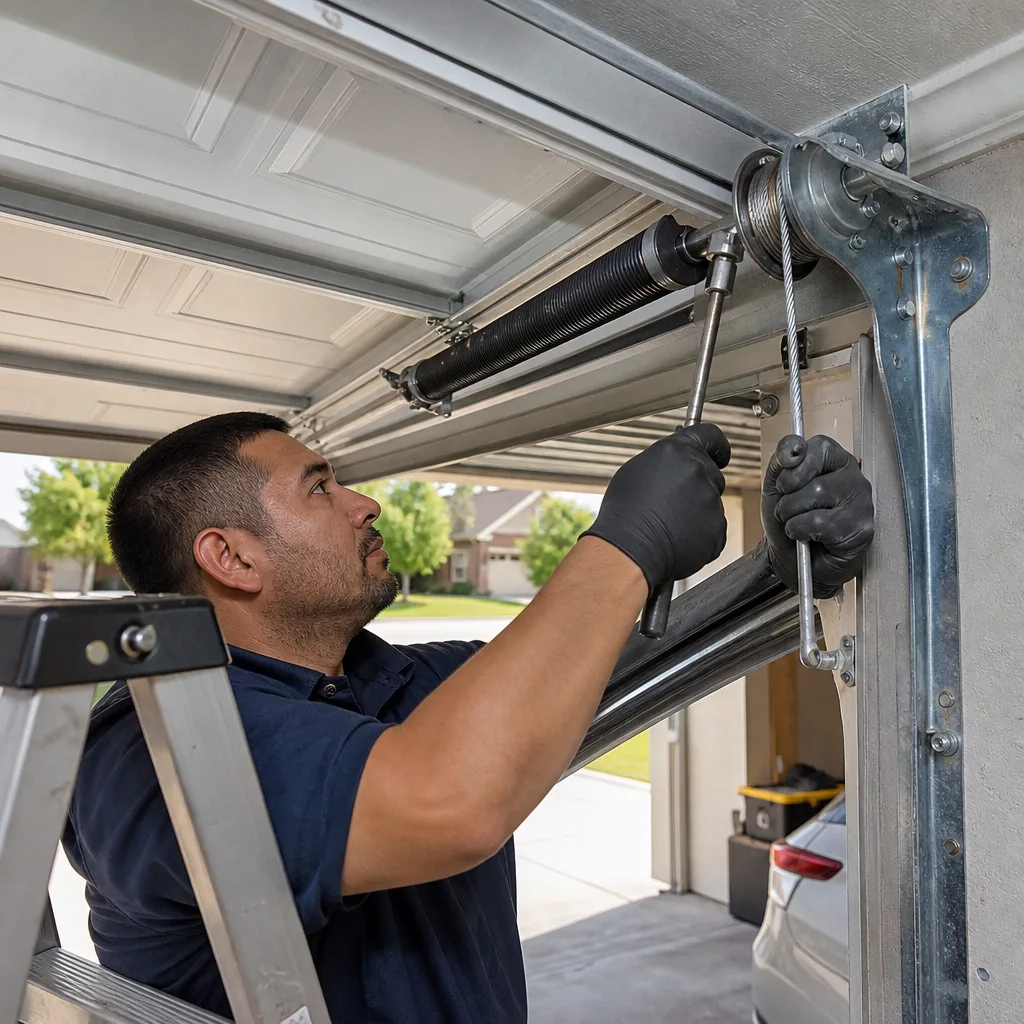
A broken torsion spring is not a DIY repair. The spring stores enough torque to cause serious injury or death. Even releasing the tension on an intact spring requires winding bars inserted into the cogs, and the wrong move can throw a bar across the garage. We do not recommend homeowners attempt this. Our technicians are trained under the K.E.Y.S. values code, and spring work is journeyman-level service.
If your door is more than eight years old and has never had a spring tension adjustment, call before the freeze. We can measure the actual door weight, check the spring rating, and adjust or replace as needed. The 90-Day Done Right Promise covers the work, in writing, with no dispute process.
Spring Pollen: The Hidden Cause of Opener Sensor Failures
Every April in Celina, the oak pollen counts spike, and our phone rings with a specific complaint: “The door starts down, then reverses for no reason.” There is a reason. The photo-eye sensors, those small black housings mounted 4-6 inches above the floor on each side of the door, are coated in yellow-green dust.
The sensors project an invisible beam across the door opening. If the beam is interrupted, the door reverses. It’s a safety feature, mandated since 1993, and it works well until pollen, spider webs, or leaf debris blocks the lens. In Celina’s oak-dominant neighborhoods, especially near the creeks and greenbelts, this happens every spring without fail.
What to check in April:
- Look at both sensor lenses. They should be clear, not frosted with pollen. Wipe gently with a dry cloth; moisture can streak the lens and create its own obstruction.
- Check that both sensors glow steady. One sends, one receives. If either LED is flickering or dark, the alignment is off, often from a bumped bracket.
- Verify the wiring. In Celina’s freeze-thaw cycles, ground movement can tug conduit loose. A wire that was taut in November may have pulled free by March.
- Test the door with a broomstick across the threshold. It should reverse on contact. If it doesn’t, the sensors are misaligned or failed, and the opener is running unsafely.
We see this in Garage Door Opener in Celina service calls every spring. The fix is usually 15 minutes. The frustration of a door that won’t close on a rainy April evening is considerably longer. Check the sensors when the pollen counts hit “very high” on the local forecast, usually the second or third week of April.
Storm Prep: Hail, Wind, and Panel Damage in North Texas
Celina sits on the southern edge of Tornado Alley, and the severe weather season runs March through June. Hail larger than golf balls falls most years somewhere in Collin County. Wind gusts of 60-70 mph are common in spring storms. Your garage door is the largest moving wall in your house, and it is not designed to take a direct hit from either.
After a storm, homeowners face a decision: repair the damaged panel or replace the door. The answer depends on the damage type, the door age, and whether the original model is still manufactured.
Hail damage to steel panels: Small dimples in the surface are cosmetic. Dents that crack the paint layer will rust, especially on the lower panels where road splash reaches. Dents that deform the internal stiffs, the ribs that give the panel its strength, compromise the door’s wind load rating. A door that was rated for 20 psf wind pressure may now fail at 15 psf. That matters for your insurance, and it matters if another storm hits.
Wind damage: Doors that blow inward often damage the track system, the hinges, and the opener carriage. The panel may look intact while the operating mechanism is wrecked. We assess the full system, not just the visible damage. A door that has been blown off its tracks once is more likely to do it again unless the track mounting is reinforced.
Replacement considerations: If your door is more than 12-15 years old, the panel style may be discontinued. Clopay, Amarr, and Wayne Dalton all update their product lines, and a single replacement panel from a 2008 model may not exist. In that case, we match the closest current style or quote a full replacement. Our Garage Door Installation in Celina page covers the options for homeowners facing this decision.
For new doors in storm-prone areas, we recommend wind-load-rated models with reinforced tracks and heavier-gauge steel. The incremental cost is modest compared to the deductible on an insurance claim.
Weatherstripping Reality: Why Celina Doors Fail Faster Than Rated
Manufacturer ratings for garage door weatherstripping assume moderate climates: 70°F average, moderate UV, stable soil. Celina meets none of these assumptions. The result is that seals rated for 5-7 years typically need replacement in 2-3 years here.
UV intensity: Celina sees more than 230 sunny days annually. The UV index in July regularly hits 10+. Rubber and vinyl compounds oxidize and crack. A seal that stays flexible in Minneapolis turns to alligator skin in Celina. We see this most on south- and west-facing doors, where afternoon sun bakes the exterior surface while the interior stays relatively cool. The thermal cycling accelerates the breakdown.
Ground movement: Celina’s black clay soil expands and contracts with moisture. A concrete slab that rises 1/2 inch in wet spring and drops 1/2 inch in dry summer changes the contact pressure between the door bottom and the seal. The seal compresses unevenly, develops permanent set, and eventually tears at the high-stress points.
Replacement cycle: For most Celina homes, plan on new bottom seal every 2-3 years, new vinyl stop molding (the seal around the door frame) every 4-5 years, and threshold seal (if installed) every 5-7 years. These are averages. A door in a shaded, well-drained location may double them. A door in full sun on expansive clay may need bottom seal annually.
We carry replacement seals for all major brands, including Clopay, Amarr, Wayne Dalton, and Craftsman. The $89 Seasonal Tune-Up includes seal inspection and replacement if needed, with the seal in stock on the truck.
What Homeowners Can Handle and What Belongs to a Pro
We encourage homeowners to do the basic maintenance. It extends door life and catches problems early. But there are hard boundaries around safety, and we mark them clearly.
Homeowner-appropriate tasks:
- Visual inspection of springs, cables, rollers, and hinges for rust, fraying, or wear.
- Lubrication of roller stems, hinge pins, and torsion spring with white lithium grease.
- Photo-eye sensor cleaning and alignment check.
- Weatherstripping inspection and replacement of bottom seal (on doors with simple retainer channels).
- Manual operation test to check balance and smoothness.
Tasks for trained technicians only:
- Spring tension adjustment or replacement. The stored energy in a torsion spring can cause fatal injury. This is not an exaggeration.
- Cable replacement. A cable under load can whip with enough force to break bone.
- Track realignment on doors with extension spring systems. The spring recoil risk is significant.
- Opener motor gear replacement or electrical troubleshooting. Incorrect wiring creates fire risk.
- Panel replacement on doors with tamper-resistant fasteners or integrated window inserts.
Our background-checked, uniformed technicians handle the dangerous work. They arrive with the parts already on the truck, state the flat price before starting, and finish most jobs in a single visit. The 90-Day Done Right Promise means if something isn’t right, we come back at no charge. No paperwork to file, no argument.
A Practical Annual Calendar for Celina Homeowners
Mark these tasks to your own calendar, or schedule our $89 Seasonal Tune-Up and we’ll handle the inspection side.
March: Post-winter inspection. Check for rust on springs and cables from condensation. Clean photo-eye lenses before pollen season begins. Test opener force settings; cold-thickened grease may have caused the motor to strain.
May: Pre-summer track and roller clearance check. Look for expansion binding. Lubricate while temperatures are moderate.
July: Mid-summer weatherstripping check. South- and west-facing doors may need early replacement. Clean debris from track interior.
October: Pre-freeze full tune-up. Lubrication, cable inspection, spring balance test, bottom seal replacement if needed. This is the most important service of the year.
November: First hard freeze watch. If the door starts running heavier, call before the spring fails. Emergency calls in January cost more in discomfort than October maintenance costs in dollars.
Year-round: Monthly visual inspection. Five minutes with the door closed and the lights on. Look, listen, and note anything that changed.
Common Mistakes to Avoid
- Using WD-40 as garage door lubricant. It is a solvent and degreaser, not a lubricant. It strips existing grease and leaves metal bare. Use white lithium grease or a purpose-made garage door lubricant.
- Ignoring a door that runs “a little rough.” In Celina’s climate, “a little rough” in September becomes “won’t open” in January. The progression is predictable and preventable.
- Replacing only one spring. Torsion springs are installed in matched pairs. Replacing one leaves the other at a different fatigue state. The new spring carries more load and fails prematurely. We replace both, always.
- Power-washing the door and opener. Water forced into the opener housing destroys circuit boards. Water in the track base freezes and splits the metal. Use a hose and soft brush, not a pressure washer.
- Adjusting the opener force settings to compensate for a heavy door. This masks the real problem, weak springs or binding hardware, and creates a safety hazard. The door should move freely before the opener is tuned.
- Waiting for a complete failure before calling. A spring with a visible gap, a cable with rust bloom, or a roller with a flat spot are all warnings. The repair is cheaper before the catastrophic failure.
- Buying weatherstripping by length at a big-box store. Generic seal rarely fits the retainer channel properly. Brand-specific seal installs correctly and lasts longer. We carry the right seal for your door.
When to Call a Professional
Call when you see rust on the cables, a gap in the torsion spring, or binding that doesn’t clear with lubrication. Call when the door reverses for no reason after you’ve cleaned the sensors. Call when a storm has dented the panels or shifted the tracks. Call when the opener motor hums but the door doesn’t move, or when the door is simply heavier than it used to be.
These are not emergencies yet, but they are the precursors. Addressing them in October beats addressing them on a 22°F morning in January when the car is trapped inside.
Mainspring Garage Door Co. offers free estimates in Celina. A technician will inspect the full system, explain what we find, and state a flat price before any work begins. No surprises on the bill. Call (214) 480-4855 to schedule.
Frequently Asked Questions
Once a year, ideally in October before the first hard freeze. Celina’s summer heat and winter cold both stress door components, and an annual inspection catches the wear that seasonal temperature swings accelerate. Our $89 Seasonal Tune-Up covers lubrication, balance test, safety check, and seal inspection. Browse more guides & resources on year-round garage door care. Call (214) 480-4855 to schedule.
The most common cause is a torsion spring that was marginally fatigued in fall and fails under winter load. Cold thickens lubricant, contracts metal, and makes the door effectively heavier. The spring works harder, and if it was already near its cycle limit, January is when it breaks. A pre-winter inspection in October identifies weakened springs before they fail.
Bottom seal replacement is straightforward on doors with standard T-style or bead-style retainer channels. Slide out the old, slide in the new, trim to length. However, many newer doors use proprietary profiles that match only the manufacturer’s seal. Side and top seal replacement requires removing the stop molding, which can damage the jamb if done incorrectly. We carry brand-specific seal and install it in one visit.
Our Seasonal Tune-Up is $89 and includes full inspection, lubrication, balance test, safety check, and seal evaluation. Repairs found during inspection are quoted separately with upfront pricing before any work begins. Most tune-ups need no additional work. For exact pricing on your door, call (214) 480-4855 for a free estimate.
Document the damage with photos for insurance, then call for inspection. Small dents may be cosmetic, but dents that crack paint or deform internal ribs compromise the door’s wind rating and will rust. We assess whether panel replacement is possible or if the door style has been discontinued. Our Free Second Opinion applies to any written estimate you’ve already received.
Oak pollen on the photo-eye sensors blocks the safety beam. Clean both lenses with a dry cloth when pollen counts spike, usually mid-April in Celina. If cleaning doesn’t fix it, check that both sensor LEDs glow steady and that the brackets haven’t been bumped out of alignment. Persistent reversal after these checks indicates sensor failure or wiring damage, which we can diagnose and repair.
The Bottom Line
Celina’s weather is not gentle, and a garage door that runs the same way in August and January is a door headed for failure. The homeowners who avoid emergency repairs are the ones who match their maintenance to the actual calendar: track clearance before summer heat, full tune-up before winter freeze, sensor cleaning during pollen season, and storm assessment after severe weather. The work is not complicated, but the timing matters. We’re here for the parts that require a trained technician, and we stand behind every job with the 90-Day Done Right Promise, in writing, with no argument.
Written by Carl Dutton, Owner at Mainspring Garage Door Co., serving Celina since 2016.