
Last updated September 10, 2026
Full 25-point door and opener safety check with every visit - springs, cables, rollers, tracks, and your LiftMaster or Chamberlain opener included
You get a price before we start. It does not change when the truck arrives.
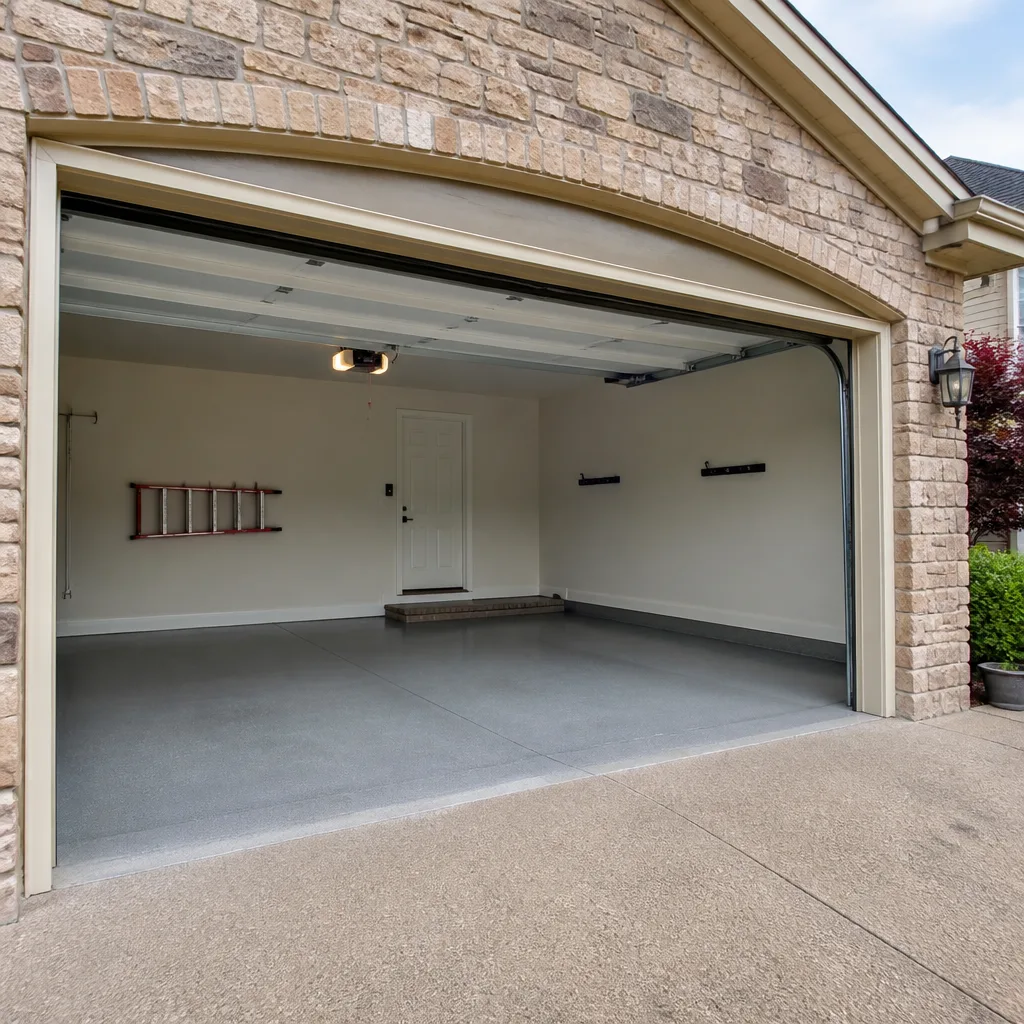
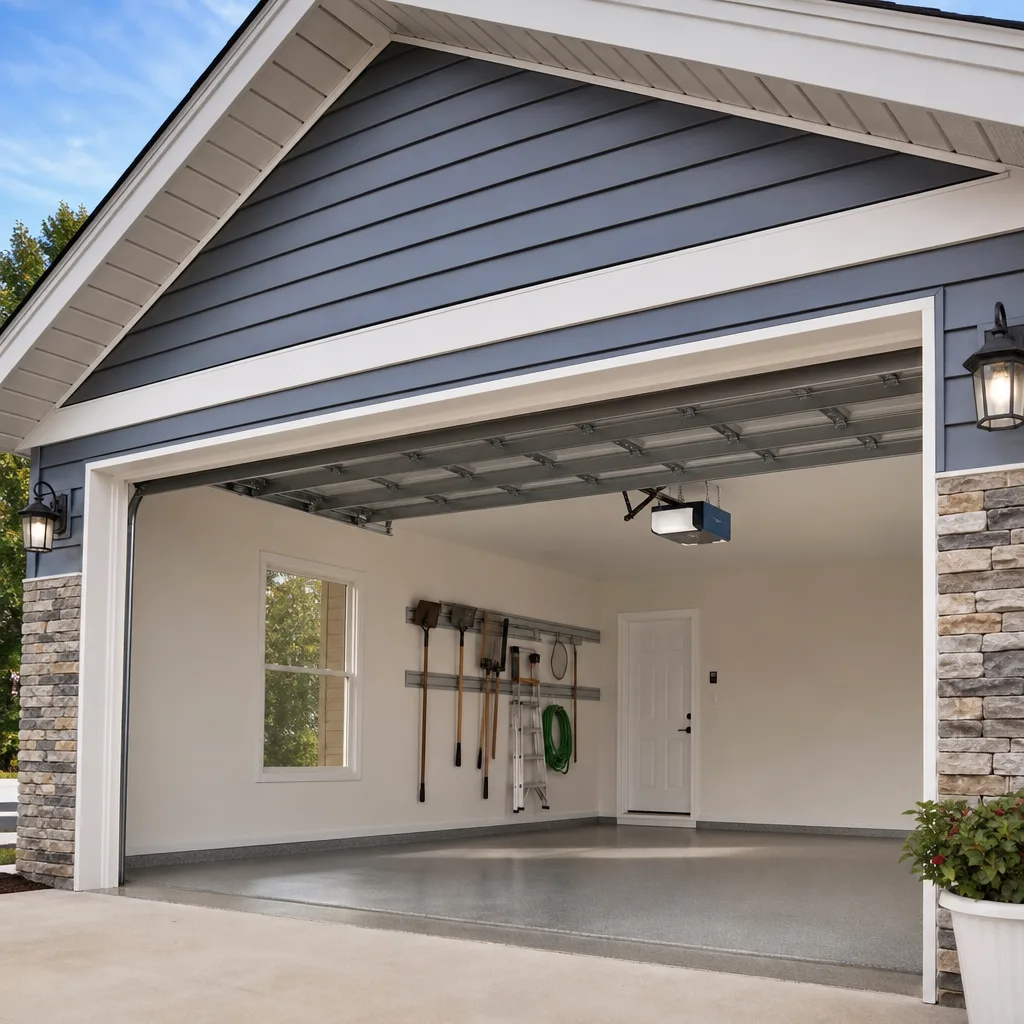
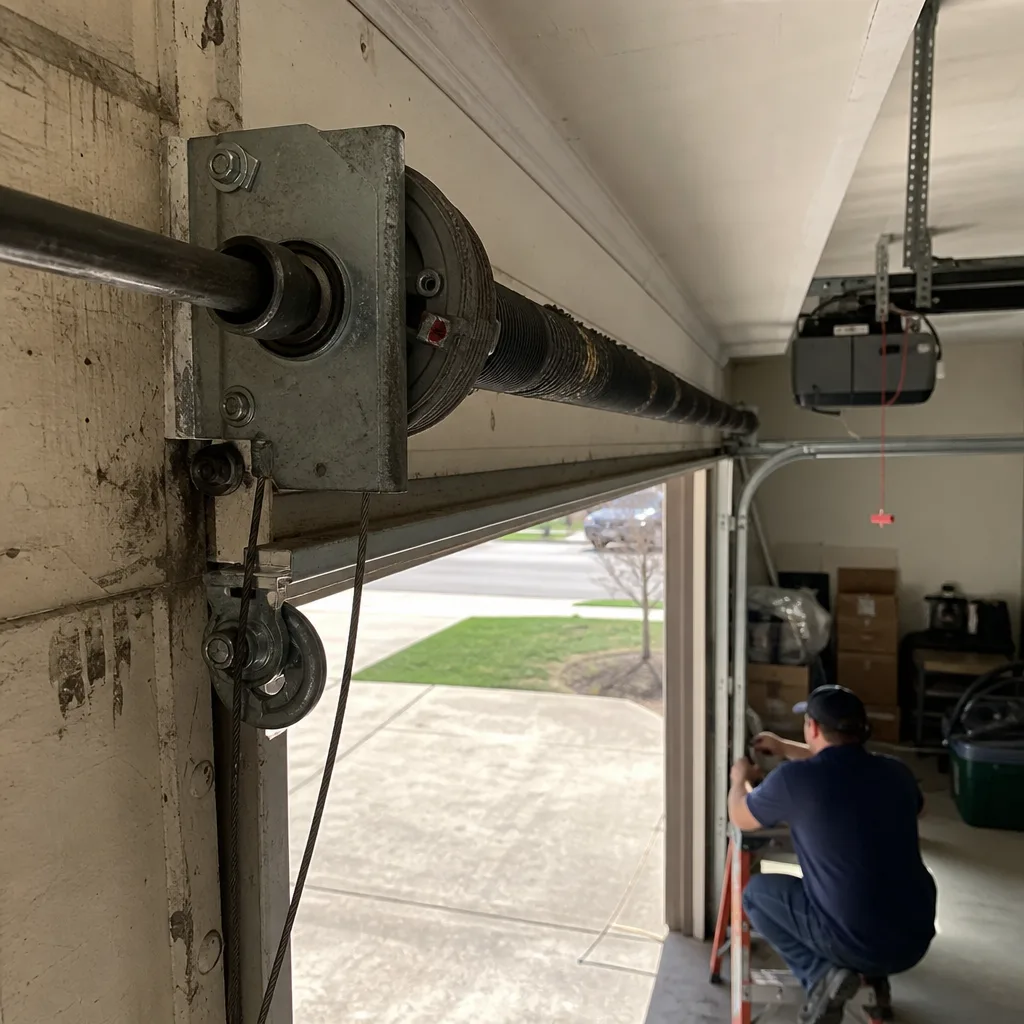 Before
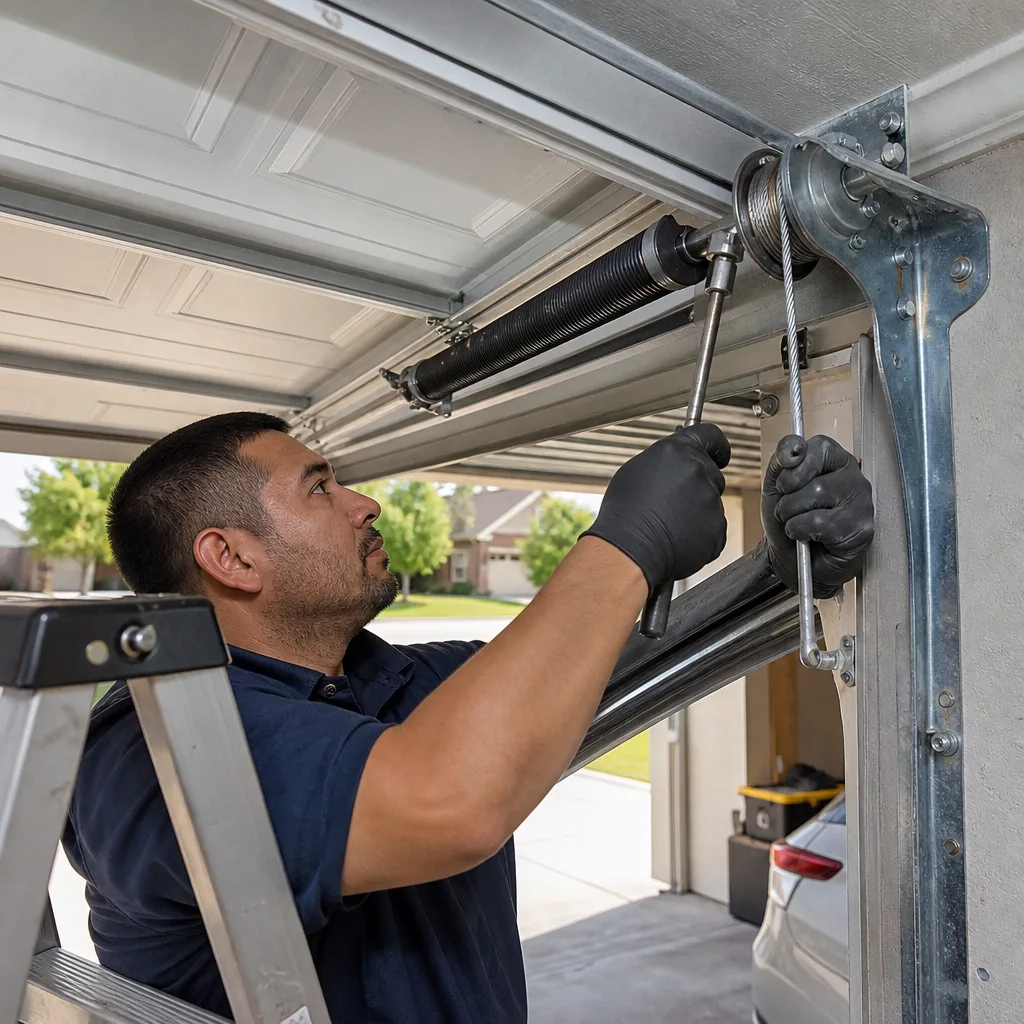 After
After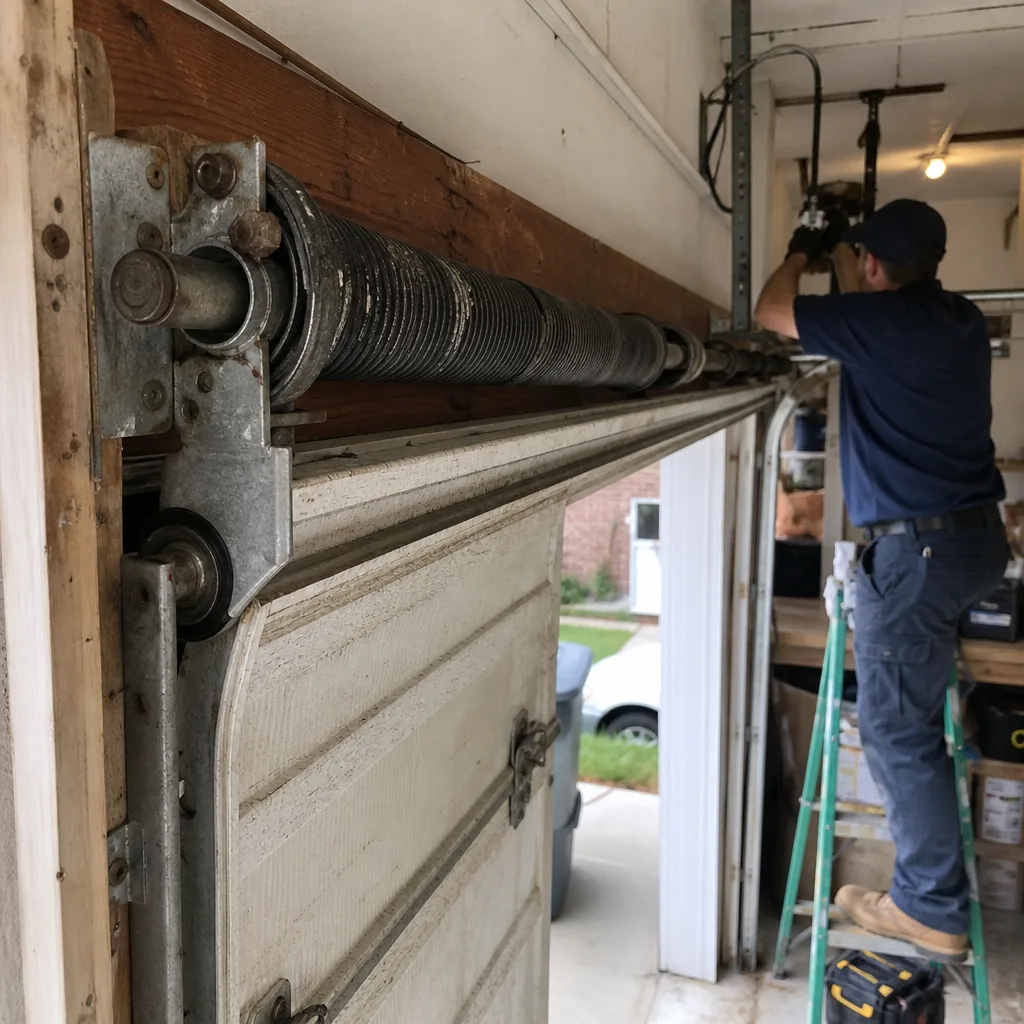 Before
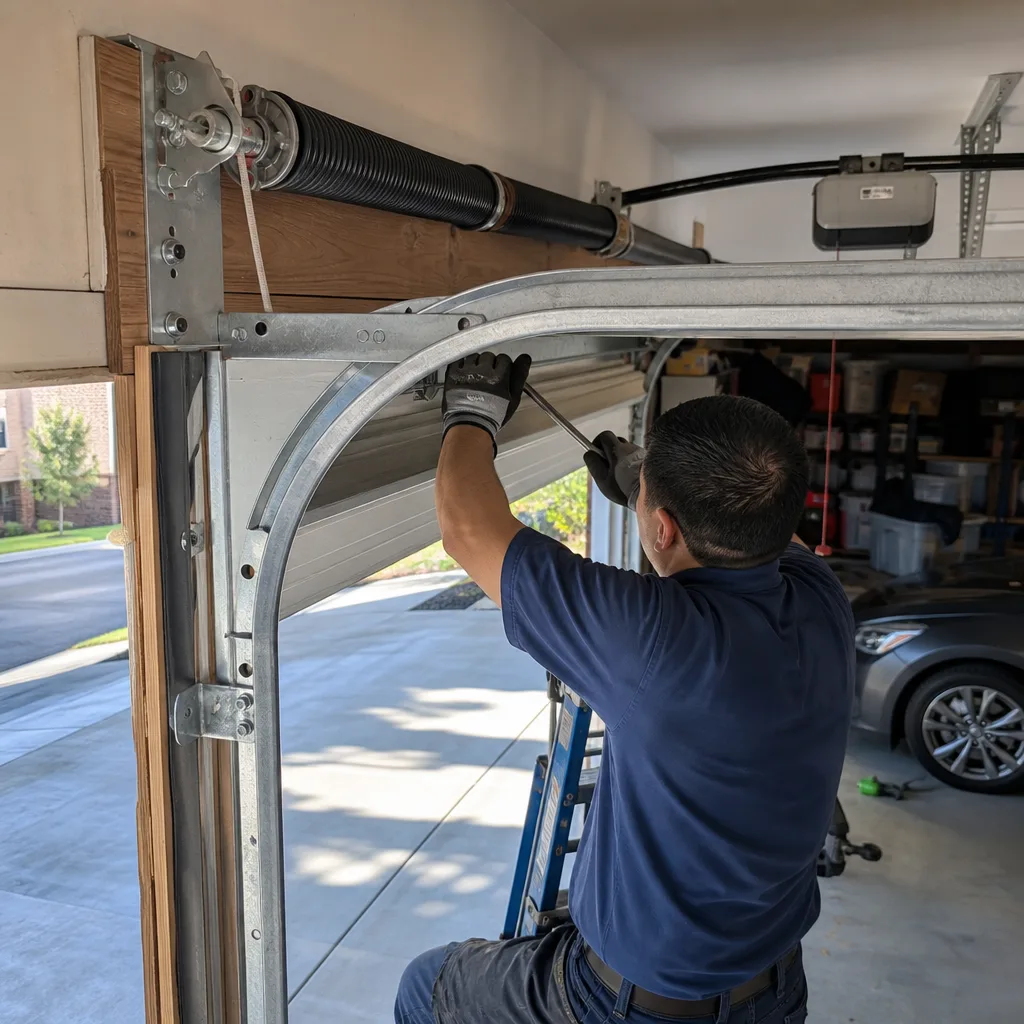 After
After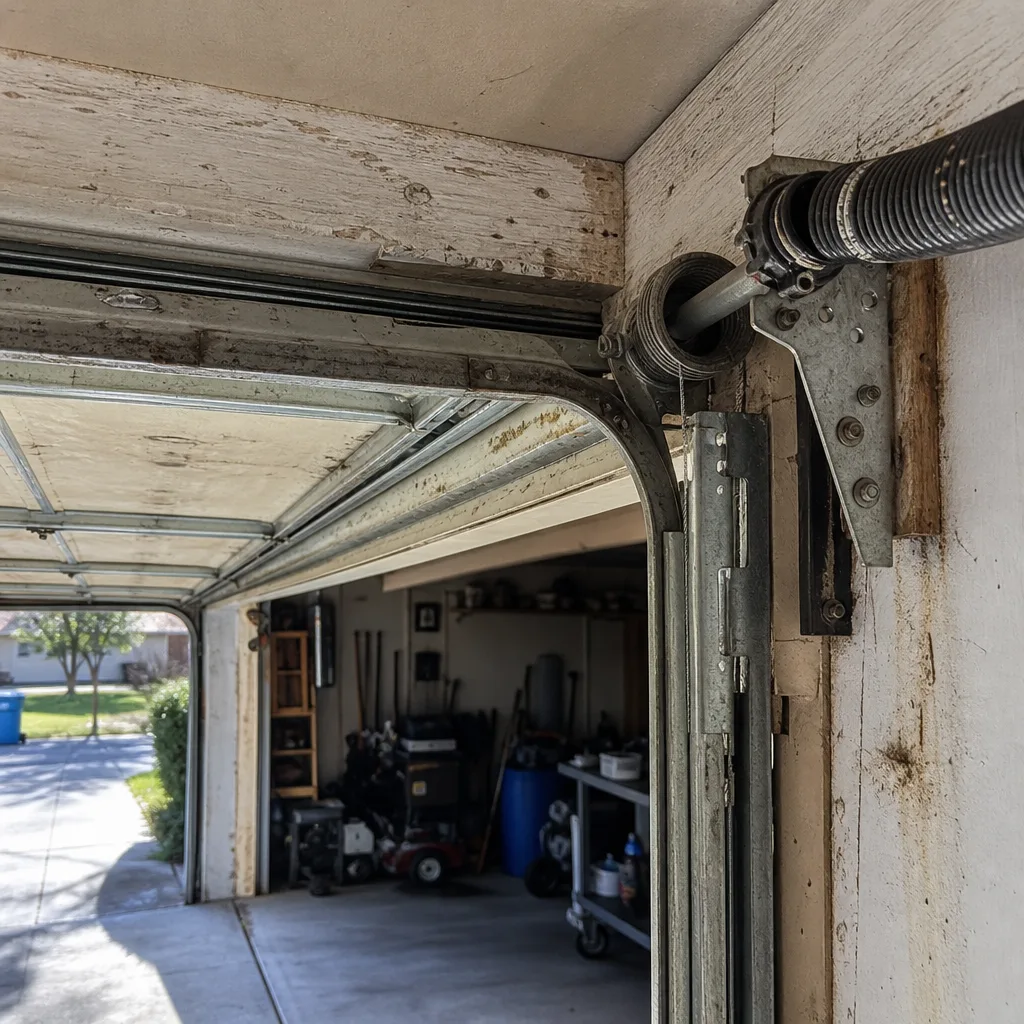 Before
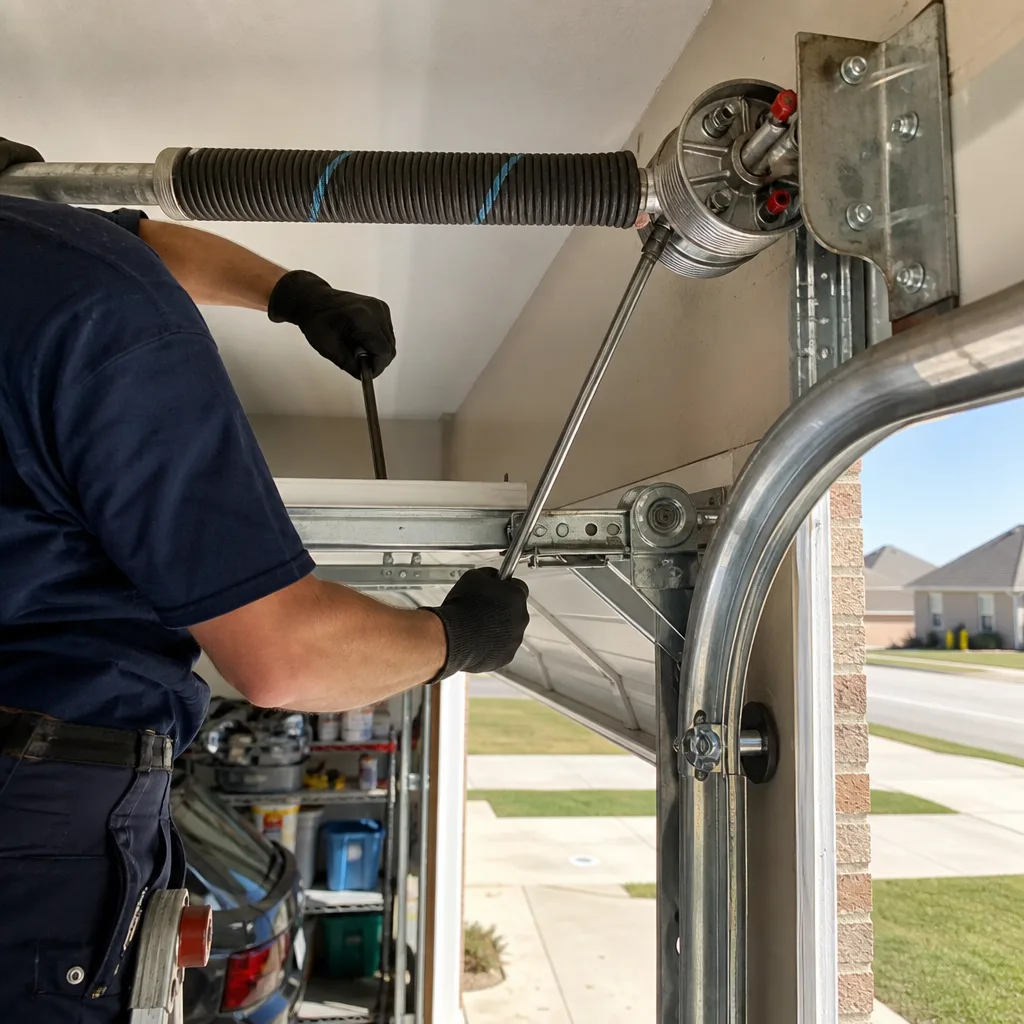 After
AfterGarage Door Permits, Codes & Inspections in TX: What You Need to Know
Homeowners in fast-growing Collin County cities like Celina are discovering unpermitted garage door work at closing, not during the project, and it is routinely the seller who funds the fix. In the last five years, Celina’s building permits division has tripled its staff to keep pace with new construction, and resale inspections have tightened accordingly. What worked quietly in a rural county in 2010 now gets flagged by title companies, lenders, and municipal code officers. This guide maps exactly when a permit is required, when it is not, and what the consequences look like when someone guesses wrong. For more guides & resources, see our blog.
Quick Answer
In Texas, a like-for-like garage door replacement on an existing opening does not require a permit, but any alteration to the opening size, structural header, or wall framing triggers a building permit under the International Residential Code. Celina enforces these rules through its own municipal amendments, and unpermitted work discovered during a home sale typically costs the seller three to ten times the original permit fee to remediate.
Table of Contents
- When Is a Garage Door Permit Required in Texas?
- How Celina’s Municipal Codes Differ from Neighboring Cities
- The Like-for-Like Threshold: What Counts as an Alteration
- What a Failed Garage Door Inspection Actually Costs
- HOA Architectural Review in Celina’s Major Subdivisions
- Who Is Legally Responsible for Pulling Permits
- Common Mistakes to Avoid
- When to Call a Professional
- Frequently Asked Questions
- The Bottom Line
When Is a Garage Door Permit Required in Texas?
Texas gives homeowners more latitude than most states. There is no statewide building code; instead, the state authorizes municipalities to adopt and enforce their own amendments to model codes. For garage door work, the critical document is the International Residential Code (IRC), specifically Chapter 3 on building planning and Chapter 6 on wall construction, as adopted by your local jurisdiction with local amendments.
The permit threshold hinges on a single question: are you replacing a door within an existing opening, or are you changing the opening itself?
No Permit Required: Like-for-Like Replacement
A direct replacement of a garage door on an existing framed opening, using the same dimensions and type, generally does not require a building permit in Texas. This applies whether you are swapping a worn steel panel door for a new one, upgrading from an uninsulated to an insulated model, or changing brands from Raynor to Amarr. The work is classified as maintenance or repair, not construction.
However, this exemption has boundaries. The replacement must not involve:
- Removing or modifying the structural header above the door
- Cutting into or reframing the jack studs or king studs beside the opening
- Changing the door width or height, even by inches
- Converting a single door to a double door, or vice versa
- Installing a door in a wall that previously had none
- Altering the wind-load rating or impact resistance below local requirements
In Celina, we have seen homeowners assume that widening a door by six inches to fit a new truck falls under “replacement.” It does not. That six inches requires cutting the header, installing a new engineered header or laminated beam, and pulling a permit with structural drawings.
Permit Required: Alterations and New Openings
Any work that alters the structural envelope triggers a permit. This includes:
- Enlarging or reducing the door opening dimensions
- Relocating a door to a different wall
- Converting a window or standard entry to a garage door opening
- Replacing a damaged header with a different size or material
- Adding a new garage door to an existing garage that previously had none
- Installing a door in a new detached garage or accessory building over 200 square feet
The permit application in Celina requires a site plan, construction drawings, and often a structural engineer’s stamp for header modifications. The fee structure runs roughly $100-$300 for residential garage door alterations, depending on valuation. Inspections typically include a rough inspection after framing and a final inspection after installation.
One detail competitors rarely mention: Celina’s building department now cross-references permit history with Collin Central Appraisal District records. If your property card shows a two-car garage and you now have a three-car garage with no permit history, that discrepancy surfaces during a title search.
How Celina’s Municipal Codes Differ from Neighboring Cities
Celina sits at an interesting intersection of growth and governance. Incorporated in 1907 but transformed by Collin County’s explosive expansion, Celina adopted the 2021 International Residential Code with local amendments effective January 2022. Neighboring Prosper adopted the same base code six months earlier, with different wind-speed designations. McKinney operates on the 2018 IRC with its own amendment package. These differences matter for garage door work.
Wind-Load Requirements
Celina’s amended IRC specifies a design wind speed of 115 mph for three-second gusts, matching the Collin County wind zone map. This exceeds the 105 mph threshold in some older Prosper subdivisions built before 2021 amendments. For garage doors, this means:
- Doors must carry a wind-load label matching or exceeding the design speed
- Retrofit wind-load kits are required for older doors in some replacement scenarios
- Exterior doors facing prevailing westerly winds, common in Celina’s open prairie terrain, face stricter fastening schedules
In our experience, Celina inspectors check the wind-load label on every permitted garage door installation. They verify that the track mounting, jamb brackets, and strut configuration match the manufacturer’s installation manual for the rated speed. A door rated for 90 mph installed in a 115 mph zone fails inspection, period.
Setback and Easement Rules
Celina’s zoning ordinance requires garage doors on accessory buildings to face away from the front property line in certain residential districts, or to be setback from side lot lines by minimum distances. Prosper has similar rules but different measurement points. McKinney exempts detached garages under 400 square feet from some setback rules that Celina enforces at 200 square feet.
For homeowners in Celina’s newer subdivisions like Light Farms, Mustang Lakes, or Cambridge Crossing, this means a detached workshop with a garage door may need zoning verification even when the structure itself is small. The permit process includes a zoning review that Prosper or McKinney might skip for the same building.
Inspection Scheduling and Timing
Celina’s building department operates Monday through Friday with next-business-day inspection scheduling for most residential work. Prosper offers same-day inspection requests before 8 a.m. McKinney has a larger staff and typically inspects within 48 hours. For homeowners managing a closing timeline, these differences matter. A Celina permit with two required inspections adds roughly five to seven business days to a garage door project, assuming no re-inspections.
We have also noticed that Celina’s inspectors are particularly thorough on fire separation between attached garages and living spaces. Any garage door work that disturbs the garage-to-house wall, even incidentally, may trigger questions about firewall continuity and self-closing door hardware.
The Like-for-Like Threshold: What Counts as an Alteration
The single most expensive misunderstanding in Texas garage door work is the belief that “replacement” covers anything short of building a new garage. Homeowners should watch for Garage Door Warning Signs: A Celina Homeowner’s Reference Guide to catch problems early. The IRC and Celina’s amendments draw a sharp line that has cost sellers thousands at closing.
What Stays Within the Threshold
These scenarios do not require a permit in Celina:
- Removing an existing sectional door and installing a new sectional door of identical width and height on the same tracks and springs
- Replacing a torsion spring system with equivalent springs, cables, and drums
- Installing a new garage door opener on an existing door with no structural changes
- Replacing damaged panels with OEM panels matching the original door
- Upgrading from a non-insulated steel door to an insulated steel door of the same dimensions
- Changing window insert configurations within a door’s existing window openings
We perform this work regularly in Celina neighborhoods, from the established homes near Old Celina to newer builds in The Parks at Wilson Creek. The key is documentation. We photograph the existing opening before work begins, measure every dimension, and keep records that demonstrate like-for-like status if questions arise later.
What Crosses the Line
These scenarios require permits:
- Raising the door height to accommodate a lifted truck or SUV, which always requires header modification
- Widening a single door to a double, even by removing the center post and installing a wider door
- Converting a carport to an enclosed garage with a new door opening
- Installing a door in a former barn, workshop, or storage building that was not originally designed for vehicle access
- Replacing a wood-frame opening with a pre-engineered steel frame that changes load paths
- Adding a pedestrian door or wicket door within the garage door itself, which alters the structural panel and may affect wind-load rating
A case from 2023 illustrates the cost of guessing wrong. A homeowner in Celina’s Bluewood neighborhood widened a single garage door to fit two vehicles side by side, using a contractor who treated it as a “replacement.” The work was competent, the door operated well, and the homeowner forgot about it. Two years later, during a sale to a buyer with a VA loan, the lender’s appraisal noted the three-car garage on a property card that showed two cars. The title company required permit verification. None existed. The seller had to hire an engineer to certify the header retroactively, pull a permit with penalty fees, and schedule inspections. Total cost exceeded $4,200. The original permit would have cost $180.
What a Failed Garage Door Inspection Actually Costs
Permit fees are cheap. Failed inspections are expensive. Understanding the difference helps homeowners make rational decisions about when to pull a permit and when to hire a contractor who will do it properly. Our How to Hire a Garage Door Contractor in Celina: A Step-by-Step Guide walks through vetting professionals.
Upfront Permit Costs in Celina
| Project Type | Permit Fee Range | Inspections Required |
|---|---|---|
| Like-for-like door replacement | No permit | None |
| Door alteration with header modification | $150-$250 | Rough + Final |
| New garage door opening in existing structure | $200-$300 | Rough + Final |
| New detached garage with door | $300-$500+ | Foundation, Framing, Final |
| Retroactive permit (after work completed) | 2x base fee + penalty | Full sequence, possible destructive inspection |
These are Celina’s published fee ranges as of 2024. Actual fees depend on project valuation and square footage.
Failure and Re-Inspection Costs
When a garage door inspection fails, the homeowner faces:
- Re-inspection fees, typically $50-$100 per visit in Celina
- Corrective labor to address the deficiency
- Possible material replacement if the installed product does not meet code
- Schedule delays that cascade into other project timelines
- In worst cases, required removal of finished work to expose framing for inspector verification
Common failure points we have observed in Celina:
- Wind-load label mismatch: The door’s pressure rating does not match the jurisdiction’s design speed. This requires door replacement, not adjustment.
- Improper header support: A 2×10 header spans sixteen feet without intermediate support. IRC tables specify engineered lumber or a support post for that span.
- Fire-rated door missing: Attached garages require a twenty-minute fire-rated door to the living space. Some homeowners remove this door during garage conversion projects and fail to reinstall it.
- Opener electrical not on dedicated circuit: New installations require a dedicated 15-amp circuit. Shared circuits with garage refrigerators or workshop equipment fail.
- Track mounting into inadequate framing: Inspectors verify that lag screws penetrate solid framing, not just sheathing or trim. Lightweight steel studs without wood backing fail.
The financial comparison is stark. A proper permit and inspection for a header modification might cost $250. A failed inspection requiring door replacement, header rebuild, and three re-inspections can exceed $3,000. The retroactive permit scenario, with engineering review and possible destructive inspection, routinely runs $2,000-$5,000.
We have handled remediation for homeowners who inherited problems from previous owners. It is never pleasant. The 90-Day Done Right Promise we offer on our own work exists precisely because we believe homeowners should never face surprise costs for work that was done correctly the first time.
HOA Architectural Review in Celina’s Major Subdivisions
City permits and HOA approvals are separate processes with separate requirements. Homeowners frequently confuse them, complete one, and discover the other blocks their project.
Major Celina Subdivisions and Their Rules
Light Farms: Requires architectural review for any exterior modification visible from the street, including garage door style, color, and window configuration. Approval typically takes fourteen days. The HOA maintains a pre-approved palette of neutral tones; bold colors or wood-grain finishes require additional review. We have installed Craftsman-style doors in Light Farms that required three submission rounds because the original window grille pattern was deemed inconsistent with the neighborhood’s farmhouse aesthetic.
Mustang Lakes: Similar street-visible requirement with a faster ten-day turnaround. The HOA specifically prohibits certain panel designs and requires that replacement doors match the original architectural style of the home’s elevation. A homeowner switching from a traditional raised-panel door to a contemporary flush panel faced rejection despite the door being higher quality.
Cambridge Crossing: Operates under a master architectural control committee with delegated review to the builder for the first two years, then to an independent committee. Garage door replacements in newer phases often still require builder approval, which can add complexity if the original builder has exited the market.
The Parks at Wilson Creek: Mature subdivision with less restrictive covenants but active enforcement. Violations discovered after installation carry fines and mandatory replacement at homeowner expense.
Older neighborhoods near downtown Celina: Often no active HOA, but some carry historic or aesthetic covenants filed with original plats. Title companies sometimes surface these during sales.
The Critical Sequence
HOA approval does not substitute for a city permit, and vice versa. The proper sequence for permitted work in an HOA community:
- Submit architectural review application to HOA with product specifications, color samples, and renderings if required
- Receive written HOA approval before ordering materials or starting work
- Apply for city building permit with HOA approval letter attached
- Complete work and schedule city inspections
- Obtain certificate of completion from city and final HOA sign-off if required
Skipping HOA approval and obtaining only a city permit leaves the homeowner exposed to HOA fines and replacement orders. Skipping the city permit while obtaining HOA approval creates the closing-time liability this guide opened with. Both are necessary.
We routinely coordinate with HOA managers in Celina subdivisions to streamline this process for our customers. It is part of doing the job right, not just installing the door.
Who Is Legally Responsible for Pulling Permits
This question has a clear legal answer and a murkier practical reality. Understanding both protects homeowners from liability that contractors sometimes try to shift.
The Legal Framework
Under Texas Occupations Code Chapter 1303 and the Texas Administrative Code, a contractor performing work that requires a permit is responsible for obtaining that permit. The contractor’s license, insurance, and bond are tied to their compliance with this requirement. A homeowner who pulls a permit for contractor-performed work assumes liability that the contractor’s insurance would otherwise cover.
However, Texas law does not prohibit homeowners from pulling their own permits for work on their own property. Many jurisdictions, including Celina, allow owner-builder permits. This creates a gray area that unscrupulous contractors exploit.
Three Scenarios We Encounter
Scenario one: The contractor pulls the permit properly. This is correct. The permit lists the contractor as the responsible party. Inspections are coordinated through the contractor. If work fails inspection, the contractor corrects it at their expense. Their general liability and workers’ compensation insurance cover the project. This is how Garage Door Installation in Celina should proceed when permits are required.
Scenario two: The contractor asks the homeowner to pull an “owner-builder” permit. This is a red flag. The contractor may be unlicensed, uninsured, or avoiding liability. Once the homeowner signs as owner-builder, they become the legally responsible party for code compliance, worker injuries, and property damage. We have seen homeowners in Celina learn this after a worker was injured on their property and the contractor’s nonexistent workers’ compensation left them exposed to a lawsuit.
Scenario three: No permit is pulled, by anyone. This is the most common and most dangerous outcome. Both contractor and homeowner hope the work goes unnoticed. It often does, until a home sale, insurance claim, or neighbor complaint triggers an investigation. In Texas, the statute of limitations for building code enforcement is not a fixed period; unpermitted work can be cited years after completion. At closing, the seller typically bears the cost of remediation because buyers demand clear title and code compliance.
How to Protect Yourself
- Verify that your contractor holds a valid Texas contractor license and carries general liability and workers’ compensation insurance
- Request a copy of the permit application with the contractor listed as the responsible party before work begins
- Confirm permit approval through Celina’s online permit portal before allowing work to start
- Never sign an owner-builder permit for work you are not personally performing
- Obtain lien releases and final inspection sign-off before making final payment
At Mainspring Garage Door Co. home, we pull permits for all work that requires them. We carry the insurance, we carry the liability, and we stand behind the inspection. That is what it means to do business with a square deal.
Common Mistakes to Avoid
- Assuming “replacement” covers any door swap. Widening, height changes, or structural modifications turn a simple replacement into an alteration requiring permits. Measure twice, permit once.
- Relying on the contractor’s verbal assurance that no permit is needed. Verify independently with Celina’s building department. The contractor who skips a permit today may be unreachable when the problem surfaces at closing.
- Ignoring HOA requirements until after installation. HOAs in Celina’s planned communities enforce aesthetic rules with fines and replacement orders. Approval takes time; build it into your project schedule.
- Installing a door with inadequate wind-load rating. Celina’s 115 mph design speed exceeds some manufacturers’ base models. The cheapest door is not the least expensive if it fails inspection and must be replaced.
- Failing to document like-for-like work. Photograph the existing opening, keep receipts, and retain contractor records. A future seller needs proof that unpermitted work was legitimately exempt.
- Accepting owner-builder permit responsibility. This transfers liability from the contractor to you. If the contractor suggests this arrangement, find a different contractor.
- Neglecting the garage-to-house fire door. Alterations to attached garages sometimes disturb fire separation. Inspectors check this, and replacement fire-rated doors are not expensive compared to a failed inspection.
When to Call a Professional
Call a licensed garage door contractor when your project involves structural modification, when you are uncertain about permit status, or when you are preparing a home for sale and need to verify compliance. The cost of professional guidance is trivial compared to the cost of remediation.
Specific scenarios that warrant a call: header modification of any kind; conversion from single to double door; new door openings in existing walls; work in HOA communities with architectural review; pre-listing inspections to identify permit gaps; and any project where a contractor suggests you pull the permit yourself.
Mainspring Garage Door Co. offers free estimates in Celina. We assess your project, identify permit requirements, coordinate HOA submissions where needed, and perform the work to pass inspection the first time. Our technicians arrive with the necessary parts on the truck, and every job is backed by our 90-Day Done Right Promise in writing. Call (214) 480-4855 to discuss your project.
Frequently Asked Questions
No, if you are performing a like-for-like replacement on an existing opening without structural changes. If you are altering the opening size, modifying the header, or changing the wall framing, a permit is required under Celina’s adopted International Residential Code. Call (214) 480-4855 for a free estimate and permit assessment.
A residential garage door alteration permit in Celina typically costs $150-$300 depending on project valuation. New detached garages run higher. Retroactive permits, required when unpermitted work is discovered, cost double the base fee plus penalties and often require engineering review. The original permit is always less expensive than the retroactive one.
The seller typically pays for remediation. Title companies, lenders, and buyers’ agents increasingly verify permit history against property records. Unpermitted work can delay closing, trigger renegotiation, or require the seller to obtain a retroactive permit with inspections. In Celina’s active resale market, this liability falls on the seller in nearly every transaction we have observed.
Yes, if the replacement violates architectural covenants. HOAs in Celina subdivisions like Light Farms and Mustang Lakes require pre-approval for exterior modifications visible from the street. HOA approval is separate from city permits; both may be required. Failure to obtain HOA approval can result in fines and mandatory replacement even if the city permit was properly obtained.
Legally, the contractor performing the work is responsible. However, Texas allows owner-builder permits, and some contractors improperly shift this responsibility to homeowners to avoid liability. Never sign an owner-builder permit for work you are not personally performing. Verify permit status through Celina’s online portal before work begins.
Celina requires garage doors to meet a 115 mph three-second gust design wind speed under adopted IRC amendments. The door must carry a labeled wind-load rating meeting or exceeding this speed. Doors rated for lower speeds, common in inland markets, fail inspection and must be replaced. We specify proper wind-load ratings on every Garage Door Repair in Celina and installation project.
The Bottom Line
Texas permits more homeowner autonomy than most states, but Celina’s growth has brought enforcement that rural habits do not survive. The rule is simple: replace a door within its existing opening freely, alter the opening only with a permit, and never let a contractor transfer permit responsibility to you. The cost of guessing wrong arrives at closing, and it is always the seller who pays. Document your work, verify your contractor’s compliance, and when in doubt, call the building department before the first screw turns. A square deal starts with knowing where you stand.
Written by Carl Dutton, Owner at Mainspring Garage Door Co., serving Celina since 2016.