
Last updated September 10, 2026
Full 25-point door and opener safety check with every visit - springs, cables, rollers, tracks, and your LiftMaster or Chamberlain opener included
You get a price before we start. It does not change when the truck arrives.

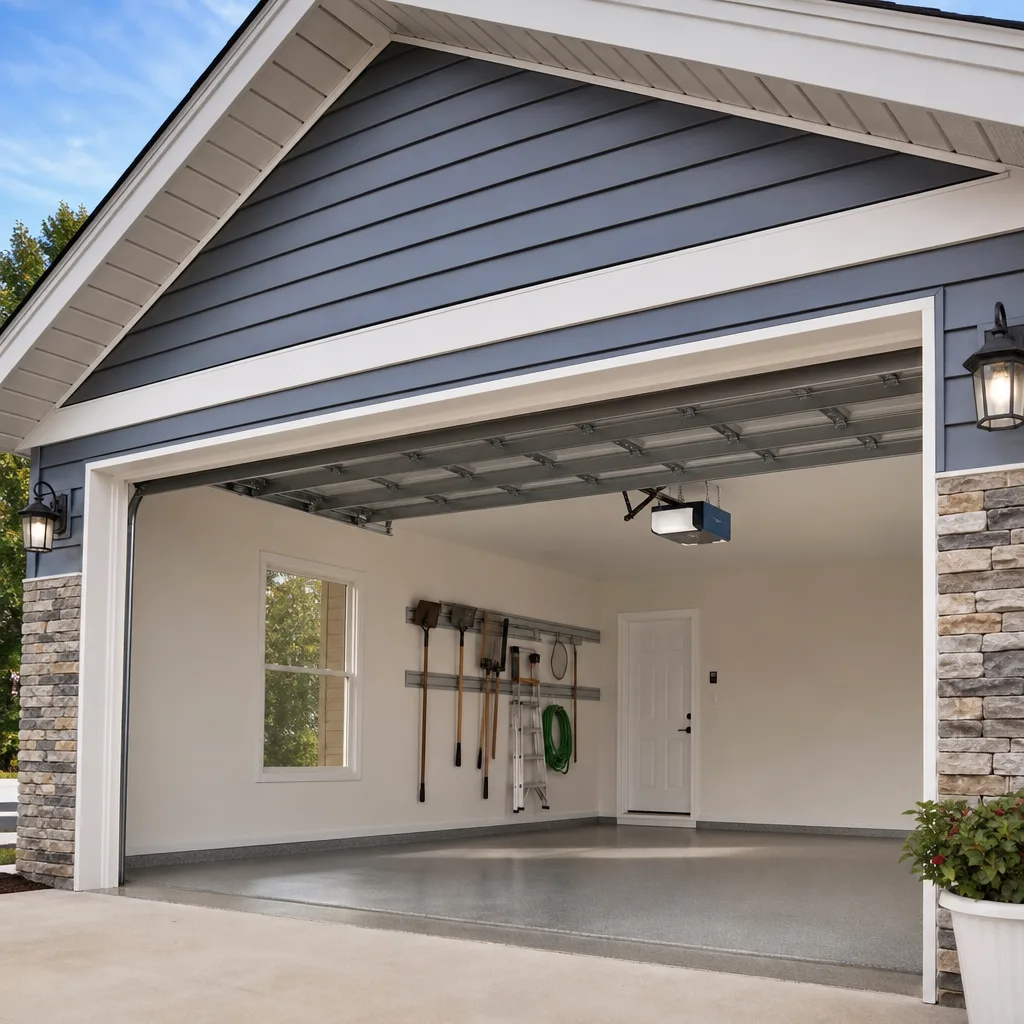
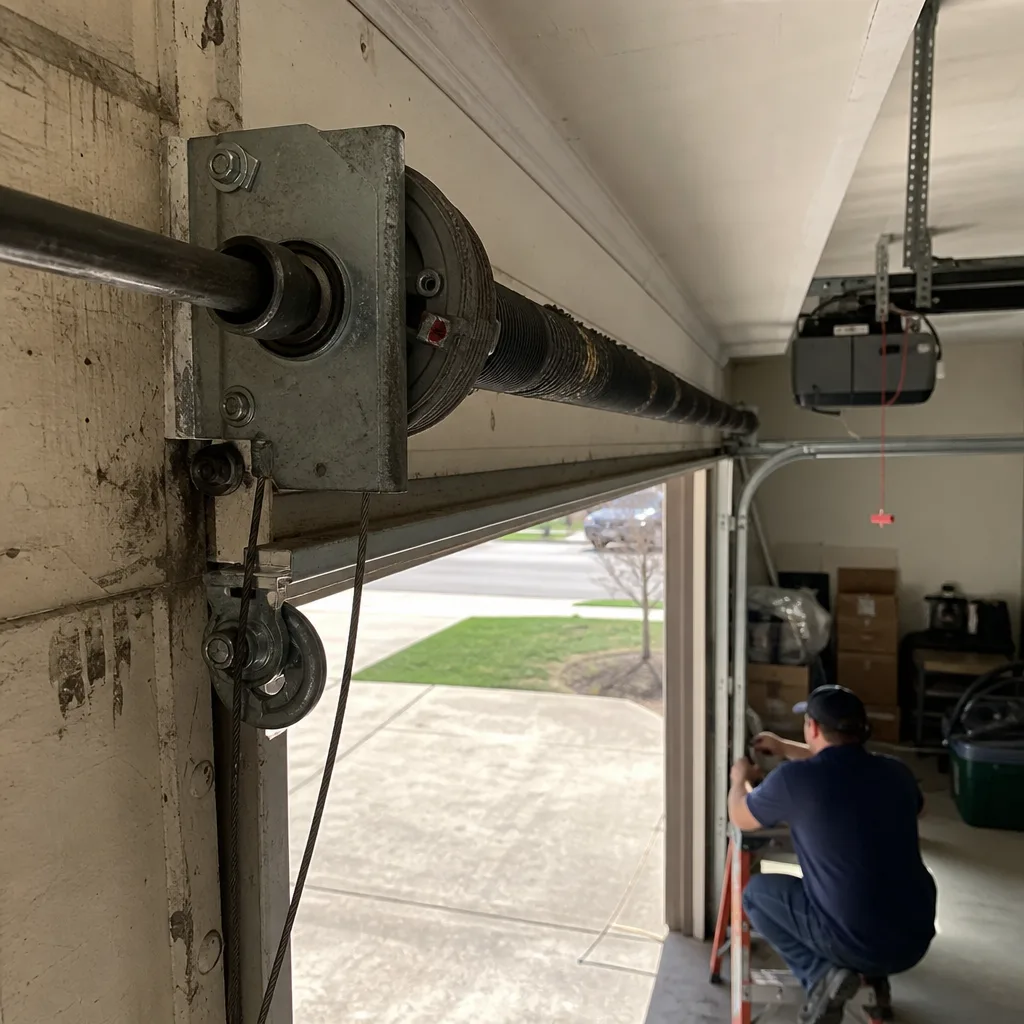 Before
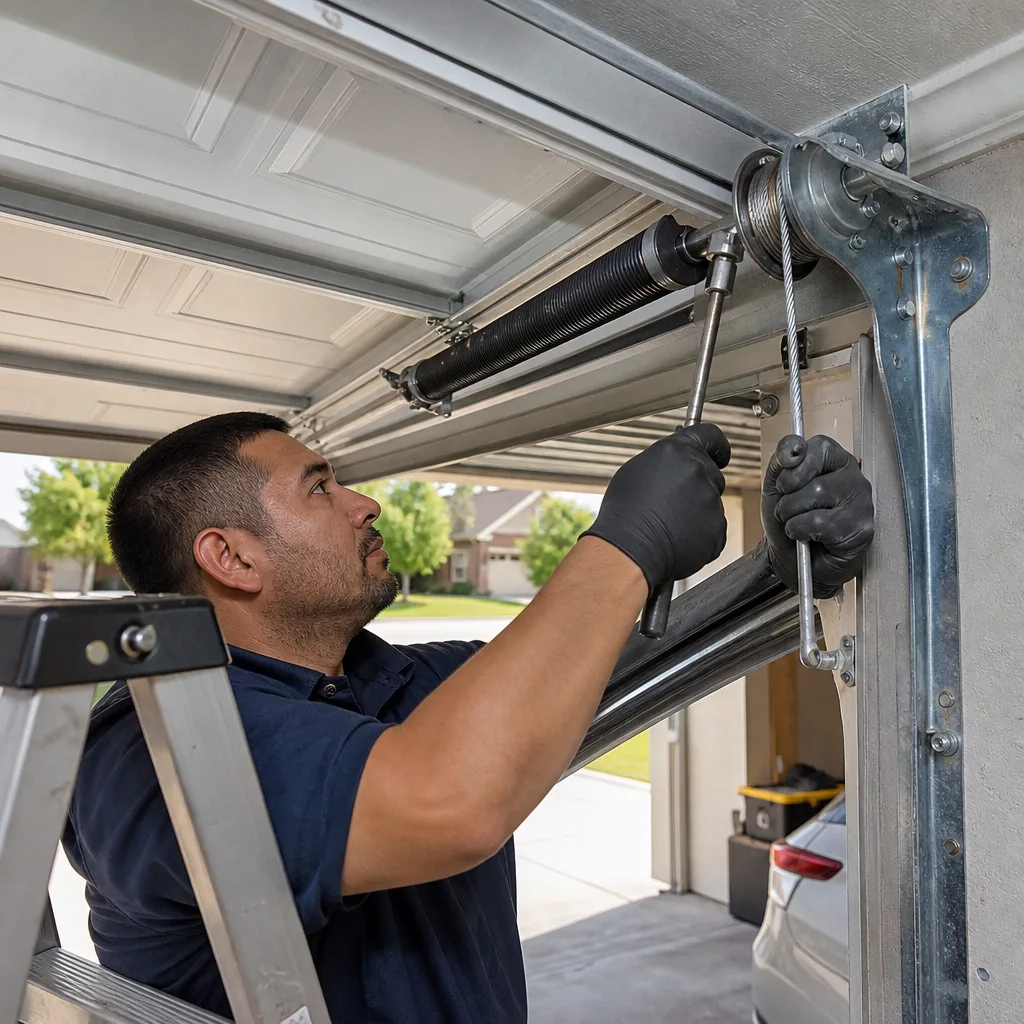 After
After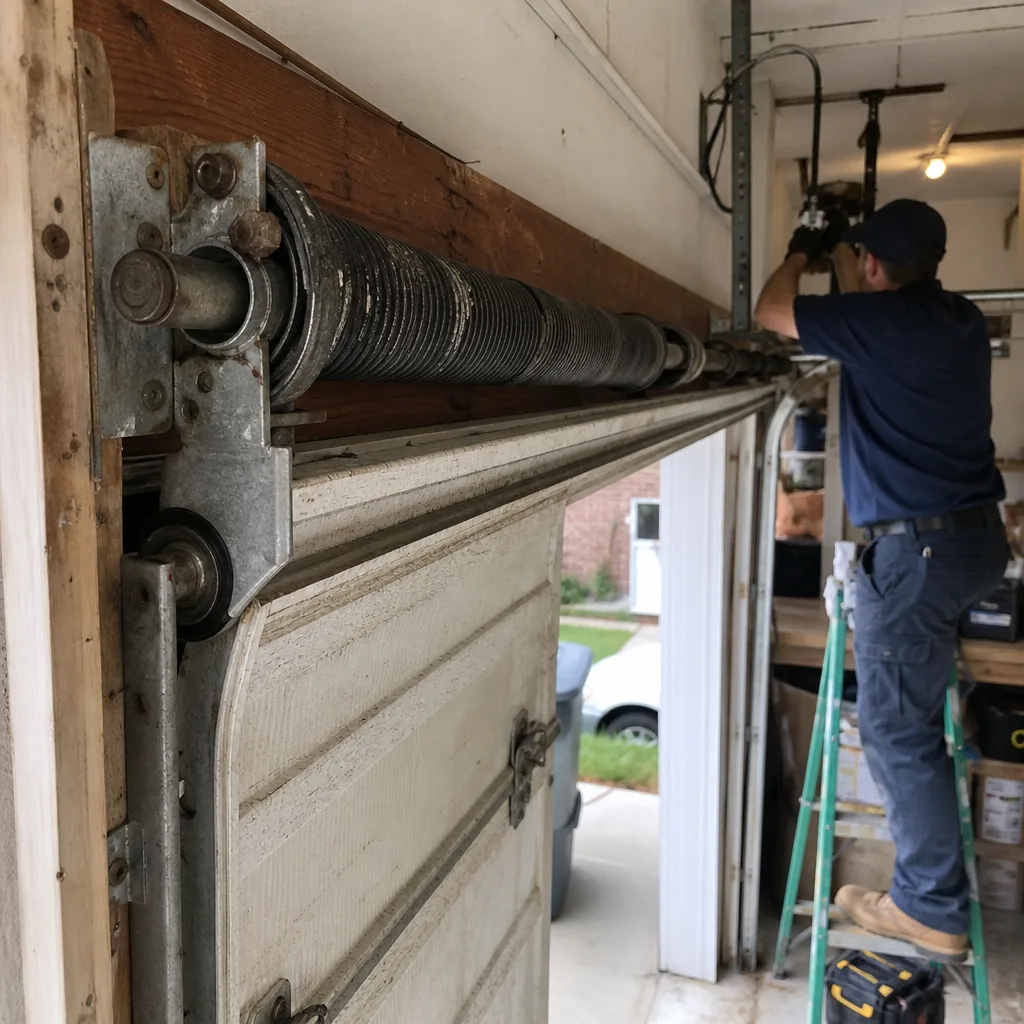 Before
 After
After Before
 After
AfterGarage Door Repair Maintenance Checklist for Celina Homeowners
The number-one cause of premature spring failure in North Texas isn’t age. It’s a door that’s slightly out of balance, and most homeowners have never run the 30-second test that reveals it. In Celina, where summer heat tops 100 degrees and winter northers drop temperatures 40 degrees overnight, garage doors take a beating that accelerates every minor problem into an expensive repair. This checklist follows the actual failure sequence we’ve watched play out across thousands of Celina homes over 42 years. Do these tasks in the right order, at the right frequency, and you’ll stop the problems that cost real money before they start.
Quick Answer
Celina homeowners should test door balance and auto-reverse safety every month, lubricate steel components quarterly with silicone-based products, inspect weatherstripping and hardware twice yearly, and schedule a professional tune-up annually. The $89 seasonal tune-up from Mainspring Garage Door Co. home catches the balance issues and force-limit drift that cause 70% of emergency calls in this market.
Table of Contents
- Monthly Safety Tests Every Celina Homeowner Should Perform
- The 30-Second Door Balance Test: How and Why
- Quarterly Lubrication: What to Use, Where, and What to Skip
- Weatherstripping Inspection for Celina’s Shifting Clay Soil
- Twice-Yearly Hardware and Track Inspection
- Garage Door Opener Maintenance and Force-Limit Testing
- What a Professional Annual Tune-Up Covers
- Celina Seasonal Considerations: Heat, Cold, and Storms
Monthly Safety Tests Every Celina Homeowner Should Perform
Two tests take less than five minutes combined. Skip them, and you’re trusting a 200-pound moving object with failing safety systems.
Test 1: The Auto-Reverse Mechanism
Place a 2×4 board flat on the floor centered under the door path. Close the door using the wall button, not the remote. When the door contacts the board, it must reverse within two seconds. If it stops but does not reverse, or if it crushes the board, the opener force limit needs immediate adjustment. This is a UL 325 safety standard, not a suggestion. We’ve replaced doors in Celina’s Light Farms and Bluewood subdivisions after openers failed this test and damaged vehicles or, in one case, injured a family pet.
Test the photoelectric eyes monthly too. Close the door, then wave a broom handle through the beam while it descends. The door must reverse immediately. Clean the lenses with a dry cloth; Celina’s caliche dust coats them quickly.
Test 2: The Manual Release
With the door closed, pull the red emergency release cord. The trolley should disconnect smoothly, and you should be able to lift the door by hand. If it binds or feels heavy, the spring system is failing. Reconnect by pulling the cord toward the opener motor until the trolley clicks back on.
Monthly task summary:
- Auto-reverse test with 2×4 obstruction
- Photoelectric eye interruption test and lens cleaning
- Manual release function check
- Visual scan of cables for fraying or rust
Never attempt to adjust spring tension yourself. The torsion spring above your door stores enough energy to cause serious injury or death. If the balance test below reveals a problem, that’s a call to a professional.
The 30-Second Door Balance Test: How and Why
This single test predicts more failures than any other maintenance task. A door out of balance forces the opener to work harder, wears springs unevenly, and eventually causes the opener gear to strip or the spring to snap.
How to Perform the Test
- Close the door completely and disengage the opener using the red release cord.
- Lift the door manually to waist height, about three feet off the ground.
- Release it gently and step back.
A properly balanced door stays in place or drifts slowly either direction. If it slams shut, the springs are weak or broken. If it races upward, the springs are over-tightened. Either condition strains every component.
In Celina, we see balance failures accelerate during temperature swings. A door that tested fine in October may fail by January after repeated expansion and contraction cycles. The expansive clay soil beneath Celina homes shifts foundations, which shifts door frames, which changes cable angles and spring loading. It’s not coincidence that balance-related calls spike two weeks after the first hard freeze and again after the first sustained heat wave.
What to do when the door fails: Call for service. Do not use the opener until the balance is corrected. Running an opener against an unbalanced door burns out the motor in months instead of years. We’ve replaced LiftMaster and Chamberlain openers in Celina’s older downtown neighborhoods that should have lasted fifteen years but failed in four because the homeowner ignored a balance problem.
The $89 seasonal tune-up includes spring tension adjustment, which restores proper balance. Most homeowners need this every 18-24 months in this climate.
Quarterly Lubrication: What to Use, Where, and What to Skip
Wrong lubricant causes more damage than no lubricant at all. We’ve opened tracks in Celina homes packed with grease that attracted dust until the rollers seized solid.
What to Use
Silicone-based spray lubricant or white lithium grease on metal-to-metal contact points. Avoid WD-40 as a lubricant; it’s a solvent and degreaser, not a lasting lubricant. Avoid heavy petroleum greases; they gum up in Texas heat and attract every particle of caliche dust.
Where to Apply
- Hinges: Spray the pivot points where leaves meet. Wipe excess; pooled lubricant collects dust.
- Roller bearings: Steel rollers only. Nylon rollers have sealed bearings; lubricating them dissolves the seal and lets grit in. If your door has nylon rollers, leave them alone.
- Spring coils: Light coat across the torsion spring surface reduces friction and corrosion. Do not touch the spring; spray from six inches away.
- Lock mechanism: If you have a manual lock, a quick shot keeps it functional.
- Track interior: Never lubricate the track itself. Rollers need clean, dry track to roll properly. Oiled tracks become sandpaper.
Celina-Specific Consideration: Dust and Heat
Celina sits on the Blackland Prairie, where caliche dust is fine, alkaline, and abrasive. Lubricated surfaces in this environment need lighter application and more frequent cleaning than manufacturer guidelines suggest. We recommend wiping tracks with a dry cloth before each lubrication session, removing the dust film that acts like grinding compound when mixed with any grease.
Apply lubricant in morning or evening during summer months. Spraying onto 120-degree metal surfaces causes immediate evaporation and wastes product. The door should operate noticeably quieter after proper lubrication. If it doesn’t, something else is wrong.
Weatherstripping Inspection for Celina’s Shifting Clay Soil
Celina’s Vertisol clay soil expands when wet and contracts when dry, moving foundations up and down by measurable fractions of an inch seasonally. This movement pulls door frames out of square, which creates gap patterns in weatherstripping that are specific to this geology.
What to Look For
Inspect the bottom seal and perimeter weatherstripping twice yearly, ideally in April and October when soil moisture is transitioning. Look for:
- Corner gaps: The most common pattern in Celina. Frame twist from foundation movement opens gaps at the bottom corners first. Light visible from inside with the door closed indicates air and water intrusion.
- Center sag: The bottom seal wears fastest in the center from repeated door contact. A gap here means the seal is compressed beyond recovery.
- Side seal compression: If one side seal is visibly more compressed than the other, the frame has shifted and the door is no longer plumb in its opening.
The Consequences of Ignoring It
Gapped weatherstripping lets conditioned air escape, but in Celina, the bigger problem is water intrusion during spring storms. Water at the door threshold wicks into the bottom panel, causing delamination on wood doors and rust on steel doors. We’ve replaced bottom sections on doors less than eight years old because the seal failed and the owner didn’t notice until the panel rotted through.
Replacement weatherstripping is inexpensive and available in standard profiles. If the frame itself has shifted significantly, a technician can often adjust the track mounting to compensate without structural work. Garage Door Repair in Celina from Mainspring includes frame assessment when we replace seals.
Twice-Yearly Hardware and Track Inspection
Vibration loosens hardware. It’s inevitable, and it’s dangerous when it happens to the wrong bolt.
The Systematic Inspection
With the door closed, examine every visible fastener:
- Hinge bolts: Check for looseness with a socket wrench. Do not overtighten; the nuts are self-locking and only need to be snug.
- Track mounting brackets: The brackets attaching vertical tracks to the door frame carry the full side load. Any movement here indicates imminent failure.
- Roller condition: Steel rollers should spin freely and show no flat spots. Nylon rollers should have intact wheels with no cracks; Texas UV degrades nylon over time.
- Cable attachment: The bottom bracket where cables attach should be secure with no fraying visible above the bracket.
- Spring anchor bracket: The bracket securing the torsion spring tube to the header must be firmly attached to structural framing, not just trim.
What Tightening Reveals
If a bolt that was tight six months ago is now loose, something is moving that shouldn’t be. In Celina’s newer construction, especially in developments like Mustang Lakes and Trinity Falls, we’ve found track brackets working loose within the first three years as the house settles into the clay soil. Catching this early prevents the track from shifting far enough for rollers to pop out.
Never remove the bottom bracket bolt or the set screws on a torsion spring. These components are under lethal tension. Tightening a loose track bracket is safe; anything involving the spring system is not.
Garage Door Opener Maintenance and Force-Limit Testing
The opener is not the muscle that lifts your door; the springs do that. The opener is the control system, and its maintenance is about safety settings and travel limits, not lubrication.
Force-Limit Adjustment: The Critical Check
Every opener has force-limit settings that tell the motor how hard to push before reversing. These drift over time as springs weaken and door balance changes. An opener set too high will crush an obstruction; set too low, it reverses on a cold morning when the door is slightly stiffer.
The adjustment procedure varies by manufacturer. Genie openers typically use dials on the power head; LiftMaster and Chamberlain units often have force-adjustment screws behind the light lens. Consult your manual for the specific steps. The general method:
- Place a 2×4 flat on the floor as in the monthly auto-reverse test.
- Close the door and observe whether it reverses promptly.
- If it does not reverse, reduce the down-force slightly and retest.
- If it reverses on the door’s normal weight without any obstruction, increase down-force slightly.
The goal is the minimum force that completes a normal close without false reversals. This is not a set-and-forget adjustment; check it twice yearly.
Travel Limit Verification
The door should seal against the floor without slamming, and open fully without hitting the stop bolt. Limit adjustments are usually screwdriver dials or buttons on the opener. Misadjusted limits strain the opener and damage the door. We’ve replaced opener drive gears in Celina homes where the upper limit was set too high, causing the opener to pull against the stop bolt on every cycle.
Modern openers with electronic limit setting, including current LiftMaster and Chamberlain models, rarely need adjustment unless something changes in the door system. If your electronic-limit opener suddenly needs limit reset, something mechanical has shifted; call for diagnosis.
What a Professional Annual Tune-Up Covers
Some maintenance requires training, tools, and the judgment that comes from doing the work daily. The annual professional tune-up covers what homeowners cannot safely do themselves.
What’s Included in the Mainspring $89 Seasonal Tune-Up
- Spring tension measurement and balance correction with winding bars on a torsion system
- Cable inspection for fraying, corrosion, and proper drum winding
- Roller replacement recommendation; we stock steel and nylon rollers on every truck
- Track alignment and bracket torque verification
- Opener force-limit and travel-limit testing with calibrated methods
- Weatherstripping condition assessment and replacement if needed
- Full hardware inspection and torque correction
- Written condition report with priority-ranked recommendations
The tune-up takes 45-60 minutes. Most are completed in a single visit because our trucks carry springs, cables, rollers, and weatherstripping for all common door sizes. If we find a problem, we quote the repair before starting any work. The price is flat and stated upfront; there are no surprises on the bill.
For Celina homeowners, we recommend scheduling in early April, before summer heat makes the garage unbearable and before spring storm season peaks. The second-best window is October, after the summer expansion cycle and before the first freeze.
Celina Seasonal Considerations: Heat, Cold, and Storms
Celina’s climate subjects garage doors to wider temperature swings than coastal Texas markets. Plan maintenance around these predictable stresses.
Summer: Heat and UV
Steel doors in direct sun reach surface temperatures above 150 degrees. This accelerates lubricant breakdown and causes thermal expansion that binds doors in their tracks. Check lubrication condition monthly from June through September. If the door starts sticking mid-day, the tracks may have expanded; a technician can verify whether the installation included proper expansion gaps.
UV degradation hits nylon rollers, rubber weatherstripping, and plastic opener components. Inspect these materials for hardening and cracking each spring.
Winter: Cold Stiffening and Freeze Events
The first hard freeze each year produces a wave of service calls. Cold-stiffened grease, contracted metal, and weakened batteries in remote openers combine to make doors sluggish or unresponsive. Replace remote batteries in November as preventive maintenance. If the door reverses on a cold morning but operates normally by afternoon, the opener force-limit is set too close to the margin; it needs adjustment before the next cold snap.
Spring Storm Season
March through May brings hail, wind, and lightning. After any severe storm, run the monthly safety tests and visually inspect the door for dented panels, bent tracks, or displaced hardware. Lightning strikes on opener circuitry are common enough that we keep replacement logic boards for major brands on our trucks. If your opener behaves erratically after a storm, unplug it and call for inspection; electrical damage can cause dangerous force-limit failures.
We’ve responded to emergency calls in Celina after hailstorms dented doors enough to bind them in the tracks, and after wind gusts shifted detached garage structures enough to twist door frames. The Garage Door Installation in Celina page covers replacement options when storm damage exceeds repair economics.
Common Mistakes to Avoid
- Using WD-40 as a lubricant. It cleans; it does not lubricate long-term. Within two weeks, metal-on-metal contact resumes, and the solvent residue attracts dust that accelerates wear.
- Lubricating nylon rollers or the track interior. Nylon rollers have sealed bearings; solvent spray destroys the seal. Oiled tracks become abrasive paste in Celina’s dusty environment.
- Ignoring a door that passes the balance test but feels “a little heavy.” Subjective feel matters. If you’re straining to lift it manually, the springs are declining and the opener is compensating. The opener will fail next.
- Tightening everything at once without checking alignment. Over-tightening track brackets can pull the track out of parallel, causing roller bind and accelerated wear. Snug is the target; gorilla-tight is destructive.
- Skipping the force-limit test because “the door works fine.” The test exists because dangerous settings don’t announce themselves. They announce themselves by injuring someone.
- Delaying service until the door stops working entirely. A door that won’t open is often a $400 emergency call. A door that opens slowly with a grinding noise is a $150 tune-up that prevents the emergency. The difference is timing.
- Assuming all garage door technicians are equivalent. In Celina’s growing market, new operators appear every season. Verify licensing, insurance, and how long they’ve answered the same phone number. A company that won’t still be there for warranty work is no bargain at any price.
When to Call a Professional
Call when safety systems fail any test, when the door does not balance, when cables fray or derail, when springs show gaps in their coils, or when the opener makes grinding or clicking noises it didn’t make before. Call before the small problem becomes the emergency that traps your car inside or leaves your home unsecured overnight. For Garage Door Warning Signs: A Celina Homeowner’s Reference Guide, see our detailed breakdown of what to watch for.
Carl Dutton and the team at Mainspring Garage Door Co. offer free estimates in Celina. A technician arrives in a stocked truck, assesses the door, and states a flat price before any work begins. Most repairs finish in a single visit. Call (214) 480-4855 to schedule, or ask about the $89 Seasonal Tune-Up that covers everything in this checklist that requires professional attention.
Frequently Asked Questions
Professional annual maintenance runs $89 to $150 depending on door size and condition. The Mainspring Seasonal Tune-Up is $89 for standard residential doors and includes balance correction, safety testing, and hardware inspection. Repairs found during maintenance are quoted separately before any work starts. Call (214) 480-4855 for an exact quote; estimates are free.
Homeowners can safely perform monthly safety tests, quarterly lubrication of appropriate components, and visual inspections. Spring adjustment, cable work, and bottom bracket service require professional training and tools; the injury risk from torsion spring components is severe and well-documented. We separate the task list in this guide by homeowner-appropriate and technician-required for exactly this reason. For How to Hire a Garage Door Contractor in Celina: A Step-by-Step Guide, see our companion resource.
Standard torsion springs last 10,000 cycles, which translates to 7-12 years for typical residential use. In Celina’s climate, heat cycling accelerates metal fatigue at the high end of that range. If your door is approaching ten years old, have spring condition assessed during the annual tune-up. Visit our more guides & resources for additional maintenance advice. We measure remaining cycle life rather than guessing by age alone.
Cold temperatures thicken remaining lubricant, contract metal components, and stiffen weatherstripping. The opener works harder against increased resistance, and dry or degraded rollers transmit more vibration. A fall tune-up that includes proper lubrication and roller condition check prevents most cold-weather noise increases.
Yes. Our technicians are factory-familiar with all major brands including Raynor, LiftMaster, Chamberlain, and Genie. We stock common repair parts for these brands on every truck and can source specialized components within 24 hours when needed. Garage Door Opener in Celina service from Mainspring covers repair, replacement, and new installation.
Every completed Mainspring job carries the 90-Day Done Right Promise in writing. If the work is not right, we return at no charge with no dispute process. The promise applies to all labor and parts we install. We’ve honored it across thousands of Celina jobs since Carl Dutton established this location; it’s how we do business.
The Bottom Line
Garage door maintenance in Celina is not about following a generic calendar. It’s about understanding how this specific climate, this specific soil, and this specific pattern of use drives doors toward predictable failures. Test balance monthly. Lubricate correctly quarterly. Inspect for Celina-specific gap patterns twice yearly. Schedule professional service annually. Do these in order, and you’ll avoid the repairs that cost real money. Skip them, and the door will remind you eventually, usually at the worst possible moment. The choice is straightforward, and so is the help: call Mainspring when you’re ready for a square deal from people who will still be here when it matters.
Written by Carl Dutton, Owner at Mainspring Garage Door Co., serving Celina since 2016.